Saturday, June 18, 2016

Family Fistuliporidae (?) bryozoan colony from the Martin formation of Arizona

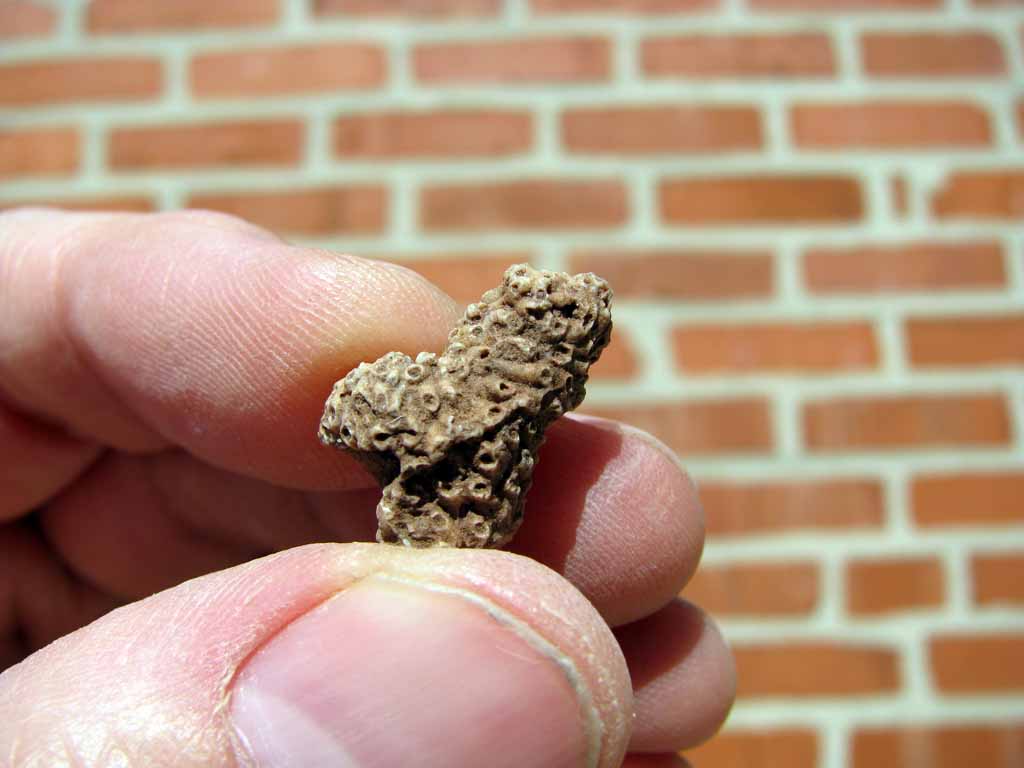
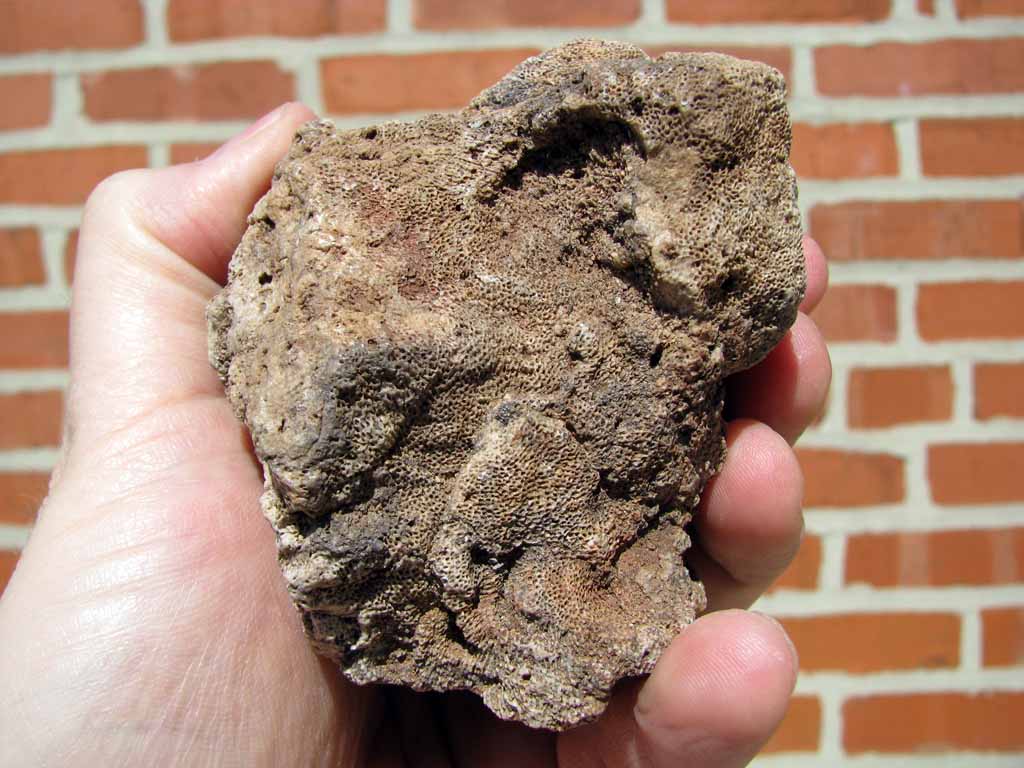
One of the most mysterious fossils that I found in the Martin formation of Arizona is this large chuck of silicified rock. The softball sized piece is composed entirely of a single colony of some sort of coral or bryozoan. As you can see in the pictures below, it is a very three dimensional piece with "pores" on all side and every surface. The small openings vary in shape but do show some "flowing" features that I interpret as a growth pattern. I don't think this is the coral Alveolites as the corallite openings of that genera are flattened and resemble fish scales. It's not likely a sponge due to the many small openings and growth patterns which sponges or stromatoporoids do not possess. I'm thinking that this is part of a massive Bryozoan colony of some species in the Family Fistuliporidae. I have found similar large and massive colonial structures like this one from the Hungry Hollow mbr. of the Widder formation from Hungry Hollow, Ontario.


Closer views of the small openings.


These specimens are from the Jerome member of the  Martin formation (Devonian, Fransian stage) north of Payson, AZ.

Wednesday, June 15, 2016

Aulopora sp. coral from the Martin formation of Arizona

Some of the silicified coral fossils that I found in the Martin formation of Arizona were composed of many small tubes that clustered close together. I recognized this as a form of Aulopora which is an encrusting type coral which sometimes forms clusters or chains on the surface of brachiopods, corals or any other hard surface. The coral colony expands by clonal budding with the new polyp attached to the exterior of it's progenitor.  Aulopora is always a neat coral to find as it often forms interesting patterns or shapes on whatever surface it encrusts.  Jeffery and Edith Langland do include a picture of an Aulopora specimen in their article (see reference below) that looks similar to the first specimen below.

Specimen #1 is a large, flat encrustation that appears to have colonized an overturned coral colony


Specimen #2 appears to be less of an encrustation and more of a vertical aspect where the polyps are using the bodies of their neighbors as a support. To me this growth habit is more reminiscent of the genera Aulocystis.


Specimen #3 has a similar growth pattern


These specimens are from the Jerome member of the  Martin formation (Devonian, Fransian stage) north of Payson, AZ.

Langland, Jeffrey O. and Edith V., 2012, "Fauna of a 400-Million-Year-Old Coral Reef in
Arizona", Rocks and Minerals, 87:1, 40-44

Friday, June 10, 2016

Spongophyllum sp. coral from the Martin formation of Arizona

I found a few specimens of a colonial rugose coral with some really deep corallites in the Martin formation north of Payson, AZ. At first I thought they might be Hexagonaria sp. but the cup depth is much greater than that genera. So, after researching a bit more, I think I have Spongophyllum sp. specimens. Here is the description for the genera that Ermin C. Stumm wrote in his paper "Upper Devonian Compound Tetracorals from the Martin Limestone", Journal of Paleontology, Vol. 22, No. 1 (Jan., 1948), pp. 40-47:
Phaceloid, subcerioid, and ceriod corals composed of cylindrical, subpolygonal, or polygonal corallites. Septa of two orders, major and minor of which the former are of variable length and the latter short or lacking. The septa are thin and are separated from the peripheral wall by a small, irregularly developed lonsdaleioid dissepimentarium. The tabularium is composed of tabulae that are usually large and complete. The peripheral dissepimentarium is composed of a single row of vertically disposed, elongated dissepiments. The dissepiments may overlap or double up in certain areas and may be discontinuous in others.
I'll be honest, I have no idea what much of that means. After doing a bunch research with dictionaries, and Google.com, this is how I translate that description:

Individual corrallites are round to slightly polygon shaped and can be columnar with slight separation or joined together with common walls. Vertical septa lines vary in length with occasional smaller lines between. The septa are thin and separated from the outer wall by small, irregularly developed, blister like skeletal walls. The colony is composed of corallites that are usually large and complete. The outer wall is composed of a single row of vertically arranged, elongated skeletal walls. The skeletal walls may overlap or double up in certain areas and may be discontinuous in others.
Hopefully that makes a bit more sense. Stumm lists two species of Spongophyllum in his paper: S. martinense and S. breviseptatum. The main difference between the two appears to be the length of the septum as measured from the outer wall. The length is 1mm in S. martinense and .5mm in S. breviseptatum. Now, onto the fossils!

Specimen #1 - dorsal view

Profile of the broken side - (it appears at first glance that the internal skeletal structure may not have been preserved and instead these fossils are steinkerns)

Ventral view

Profile of the unbroken (edge of the colony) side

Isometric view into the corallites where you can see the septa (thin vertical lines)

Specimen #2 - dorsal view

Same view, just rotated 90 degrees. The rest of the fossil was not terribly photogenic.

These specimens are from the Jerome member of the Martin formation (Devonian, Fransian stage) north of Payson, AZ.

In addition to Google.com and the dictionary, I used the following references to identify these specimens:

- A helpful powerpoint with coral anatomical terms and examples from Dave Krupp's website.
- The website Corallosphere.org where I was able to figure out some of the technical terms that Stumm used in his descriptions.
- Langland, Jeffrey O. and Edith V., 2012, "Fauna of a 400-Million-Year-Old Coral Reef in
Arizona", Rocks and Minerals, 87:1, 40-44

Saturday, June 4, 2016

Pachyphyllum nevadense coral from the Martin formation of Arizona

One of the most common fossil corals that I found from the Martin formation is Pachyphyllum nevadense. Trying to get a nice big piece was hard as the fossils break off as they weather out of the rock. Pachyphyllum is a colonial rugose coral that is easy to recognize by the many circular corallites that are surrounded by linear striations. The lines are the septae of the coral which means that the body of the animal would have extended out of the cup shaped, round depressions until it met a neighbor. As colonial corals of all kinds are clonal by nature, this would not have been an issue between members of the colony, only if it met a different colony.

This is a small, complete colony which shows some vertical growth. Perhaps this indicates that it had to compete with other surrounding colonies for space or needed to outgrow the deposition of sediment around it's base.


Here is a larger colony which appears to have been later colonized by a stromatoporoid (along the edge of the piece at the top of the picture).


Lastly is this nicely preserved, but partial colony.


A side view of the colony where you can see the generally wide and flat growth pattern.

This is the underside of the specimen. It appears to have either not been fully preserved or perhaps was exposed and reworked on the ocean floor before final burial.

All the fossils shown on the page have been silicified (replaced by quartz). This process can sometimes be imperfect and that is why there are often gaping holes or seemingly incomplete preservation. These specimens are from the Jerome member of the Martin formation (Devonian, Fransian stage) north of Payson, AZ.

Compare these specimens to P. woodmani from Iowa and Phillipastrea sp. from Morocco.

Thursday, June 2, 2016

Exploring the Martin formation of Arizona

Back in March I took a couple of days off ahead of a week of corporate meetings in Tucson, AZ to do some exploring in the Grand Canyon state. Besides visiting the typical tourist destinations, Grand Canyon, Petrified Forest, Meteor Crater, etc., I got in a little fossil collecting. One of the spots I visited was just south of the Mogollan Rim in the Tonto National Forest near Payson, AZ. The hills north of Payson expose paleozoic rocks from the Cambrian through the Permian. My target was exposures of the upper Devonian (Fransian stage) aged Jerome Member of the Martin Formation. Within the Jerome Member are silicified fossils with some good to excellent preservation. Much of what you find are corals but there are some Brachiopods to be found as well. Following some helpful advice from a Fossil Forum member, and a couple of guide books, I picked an area along the Fire Control Rd. to explore.

A view of Fire Control Road with the Mogollon Rim in the distance.

The area I stopped at had a jeep trail that ran roughly parallel with Fire Control Road. It was too difficult to try and drive my rental SUV up the transitional slope from the road to the trail so I parked about 1/4 mile down the road at a pull off.

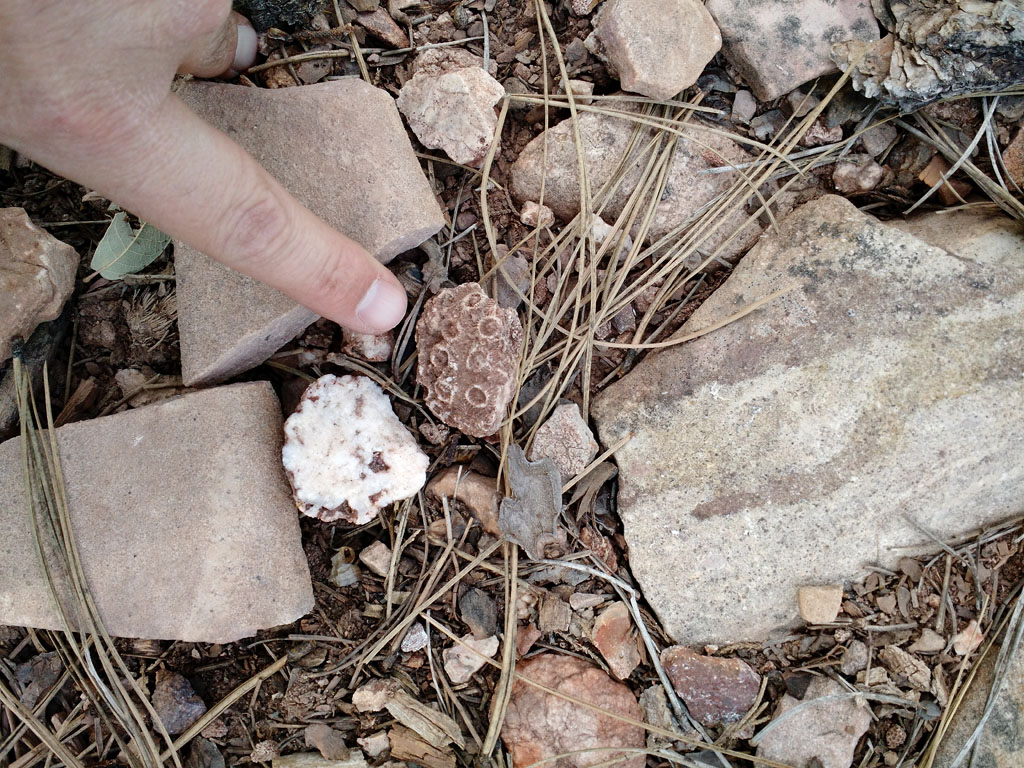
As I walked along the trail I was finding some small, broken pieces of coral in the dirt. There are also many white concretions that occasionally had hollow, geodized areas within. The concretion exteriors resembled cauliflower and appear to be composed entirely of Quartz.


I was not finding any larger pieces by walking along the trail so I decided to hike uphill and see if I could find the source of the float.

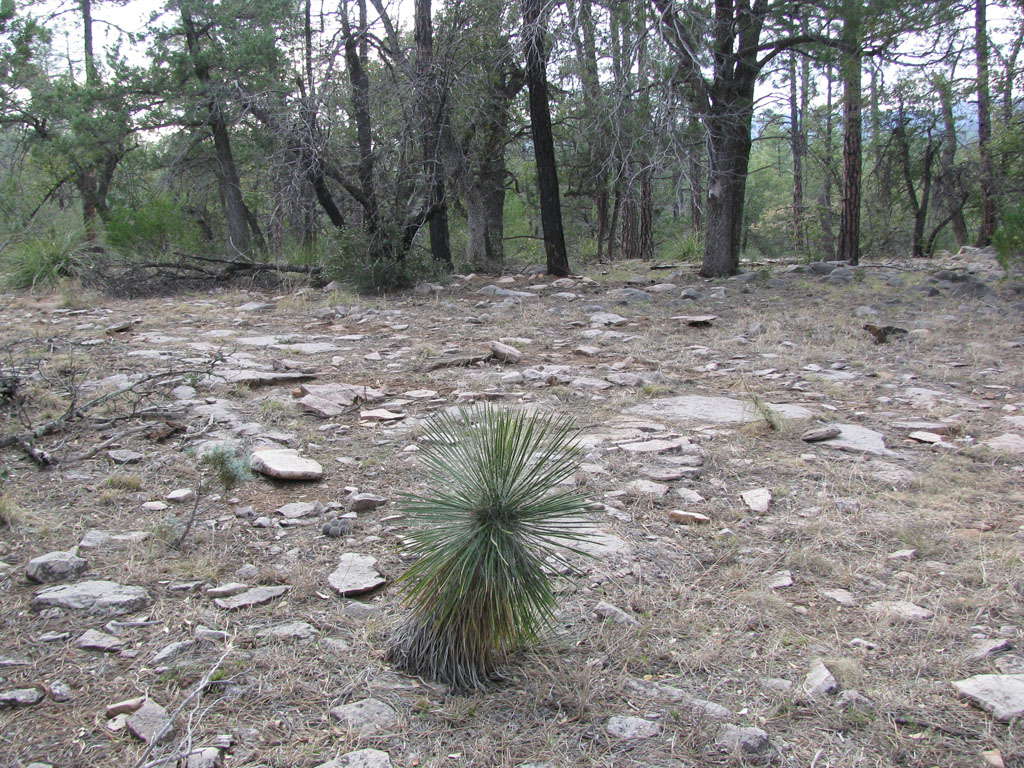
It wasn't long before I found exposures of limestone poking up from the pine straw.


There were also many more pieces of the silicified coral lying about as well as some embedded in  loose rock and large boulders.

Fossils other than coral were not very common but I did find some areas with brachiopods weathering out of the rock. Overall they were not as well preserved, I think due to their thin shell which fell apart easily during the weathering process.


As I was travelling I had to limit myself on how many fossils and matrix pieces I could bring back. There was so much material at the site I visited that I could easily have filled several suitcases. I'll detail some of the fossils I found in the next few blog posts.


References:
Teichert, C., 1965, "Devonian Rocks and Paleogeography of Central Arizona",  USGS Professional Paper 464

Langland, Jeffrey O. and Edith V., 2012, "Fauna of a 400-Million-Year-Old Coral Reef in
Arizona", Rocks and Minerals, 87:1, 40-44

Stumm, Erwin C., 1948, "Upper Devonian Compound Tetracorals from the Martin Limestone", Journal of Paleontology, Vol. 22:1, pp. 40-47