Showing posts with label Wanakah Shale. Show all posts

Tuesday, February 4, 2014

Eridophyllum archiaci coral from along Lake Erie

As I have been sorting through my finds from along Lake Erie and the Penn Dixie site in Blasdell, NY I've come across some coral specimens that I think are Eridophyllum archiaci. I showed a previous specimen (E. subcaespitosum) from the Penn Dixie site that showed the budding habit of reproducing but these are individual, finger like pieces and a few have the calice preserved.

Specimen #1

 Here is the preserved calice. It could use a little cleaning but you can see some of the septa.

Specimen #2 appears to be a section from near the base of an individual. You can see a curve to the corallite and a couple of support structures coming off the side.


Specimen #3


 This specimen's calice is better defined and you can see that it does have a depression in the middle.

These specimens come from along Lake Erie near 18 Mile Creek and could have originated within either the Wanakah shale of the Ludlow Formation or the Windom shale of the Moscow formation. Both are Devonian period, Givetian stage.

Sunday, February 2, 2014

Athyris spiriferoides brachiopod from the Wanakah shale

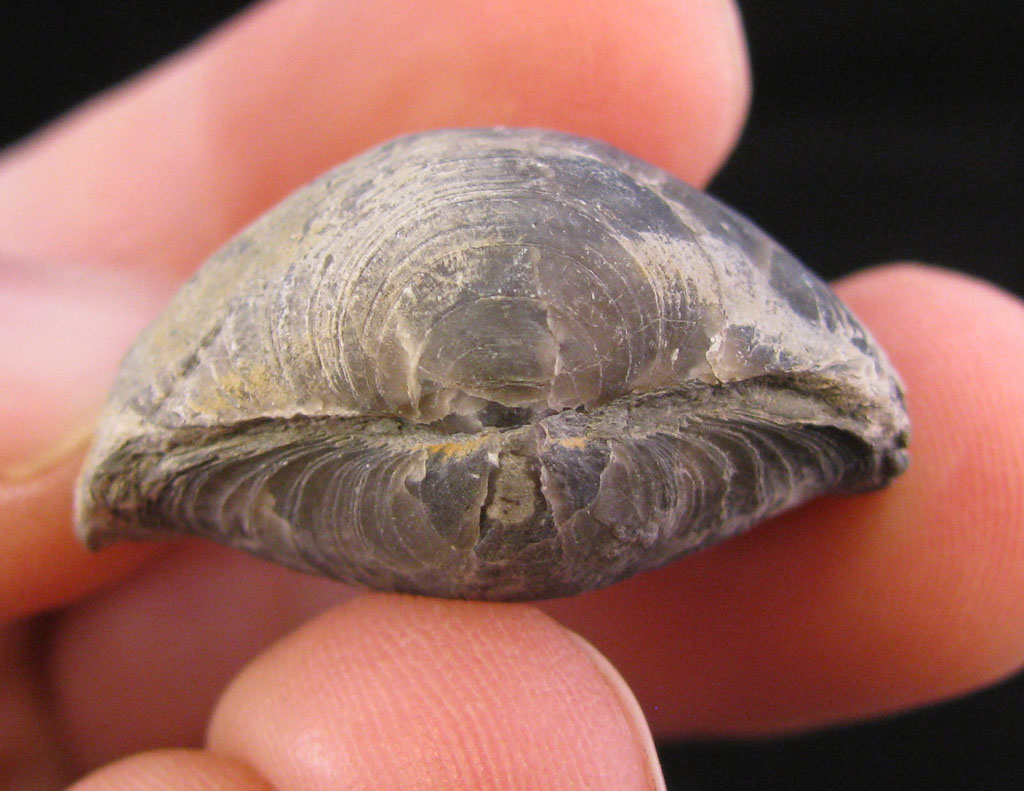
While reviewing all the fossils that I've written about from the Ludlowville and Moscow formations I realized that I'd never blogged about one of the most common fossils found in those rocks: Athyris spiriferoides. It's the most common fossil found along Lake Erie and is often found wave tossed and tumbled in the surf. It can be so abundant that in an hour of walking along the shoreline one can pick up two to three dozen specimens.
Here are three random specimens I picked up on my last trip to Lake Erie.

Specimen #1

Pedicle valve
Anterior
Brachial valve
Posterior
Profile

Specimen #2
Pedicle valve
Anterior
Brachial valve
Posterior
Profile

Specimen #3
Pedicle valve
Anterior
Brachial valve
Posterior
Profile

The three specimens show a size and shell shape range common to the species. At other localities the shell is much wider than long or they don't get this big. Some of the larger specimens will sometimes have a hollow cavity within filled with calcite. It's interesting to see that the shell is smooth for the most part until towards the edges where it shows some "flakes". I attribute that to the way the shell grew not as an result of erosion.

All three specimens came from the Wanakah Shale member of the Ludlowville formation along Lake Erie near 18 Mile Creek.

Thursday, January 23, 2014

Amplexiphyllum hamiltoniae coral from the Windom Shale

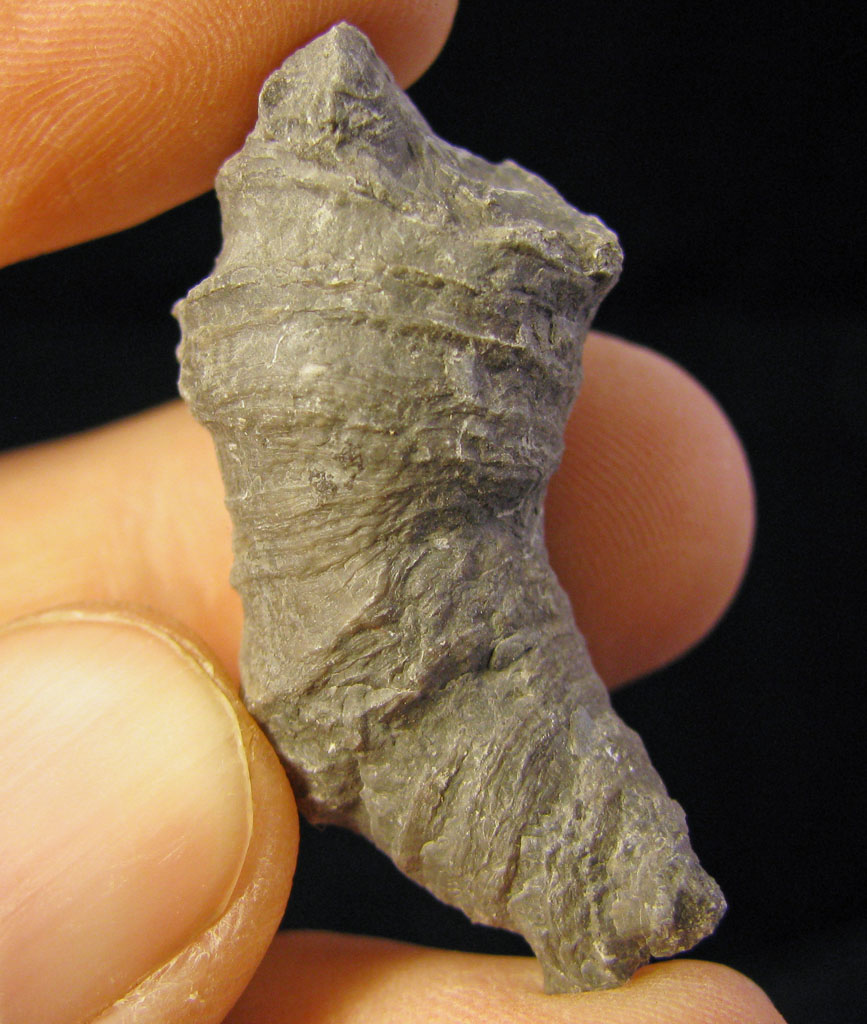
The next most common coral to be found in the Wanakah/Windom shale is Amplexiphyllum hamiltoniae. This coral is most easily identified by it's length, consistently narrow diameter and tendency of the corallite to show bends. Unlike Stereolasma rectum, this coral seemed to grow higher from the sea floor and so would be subject to toppling by wave base or current action.

Specimen #1 is small but shows the consistent diameter growth pattern.


Specimen #2 is still in matrix and shows a particularly long specimen. This is often the best way to collect these corals as otherwise they are found as fragments within the loose shale as they erode out.


Specimen #3 is also preserved in the matrix but is not as photogenic as the previous specimens.


All three specimens shown were collected from the Windom shale mbr. of the Moscow Formation (Smoke Creek Trilobite bed most likely) at the Penn Dixie site in Blasdell, NY.  Both the Moscow formation and the Wanakah formation are Devonian (Givetian stage) in age.

Tuesday, January 21, 2014

Stereolasma rectum coral from western New York

Possibly the most common and easily recognized coral found in the middle Devonian rocks of western New York is Stereolasma rectum. This is a small, solitary horn coral identified by the typical "horn" shape with obvious septal grooves on the side of the corallite. It thrived in the limy mud that was prevalent at the time but didn't seem to grow very high above the sediment surface of the sea floor. The specimens below were collected from along Lake Erie and are from either the Wanakah Shale mbr. of the Ludlowville Fm. or the Windom Shale mbr. of the Moscow formation.

Specimen #1


Specimen #2


Often the calices of these corals are infilled with rock or crushed as on this specimen.

Specimen #3, Occasionally you will find a specimen where the thecal cup has been broken away and the septae are visible as in the below fossil. (This particular specimen was collected from the Ledyard shale mbr. of the Ludlowville Fm. near East Bethany, NY)


Sunday, January 19, 2014

Pleurodictyum americanum coral from the Wanakah Shale

There is a bed present within the Wanakah shale member of the Ludlowville formation (Devonian, Givetian stage) called the "Pleurodictyum bed". As may be guessed, the coral Pleurodictyum americanum is common within the layers of this zone. Below are a couple of examples that I found along the shore line of Lake Erie. They stand out for me because of the substrate they colonized.

Specimen #1 is narrow because it started on the shell of a Paleozygopleura sp. gastropod.


Specimen #2 chose a section of Sulcoretipora sp. bryozoan.


Since Pleurodictyum needed a hard substrate to cement itself to, it's not surprising to find skeletons of other animals being used.