Showing posts with label Indiana. Show all posts

Saturday, August 29, 2020

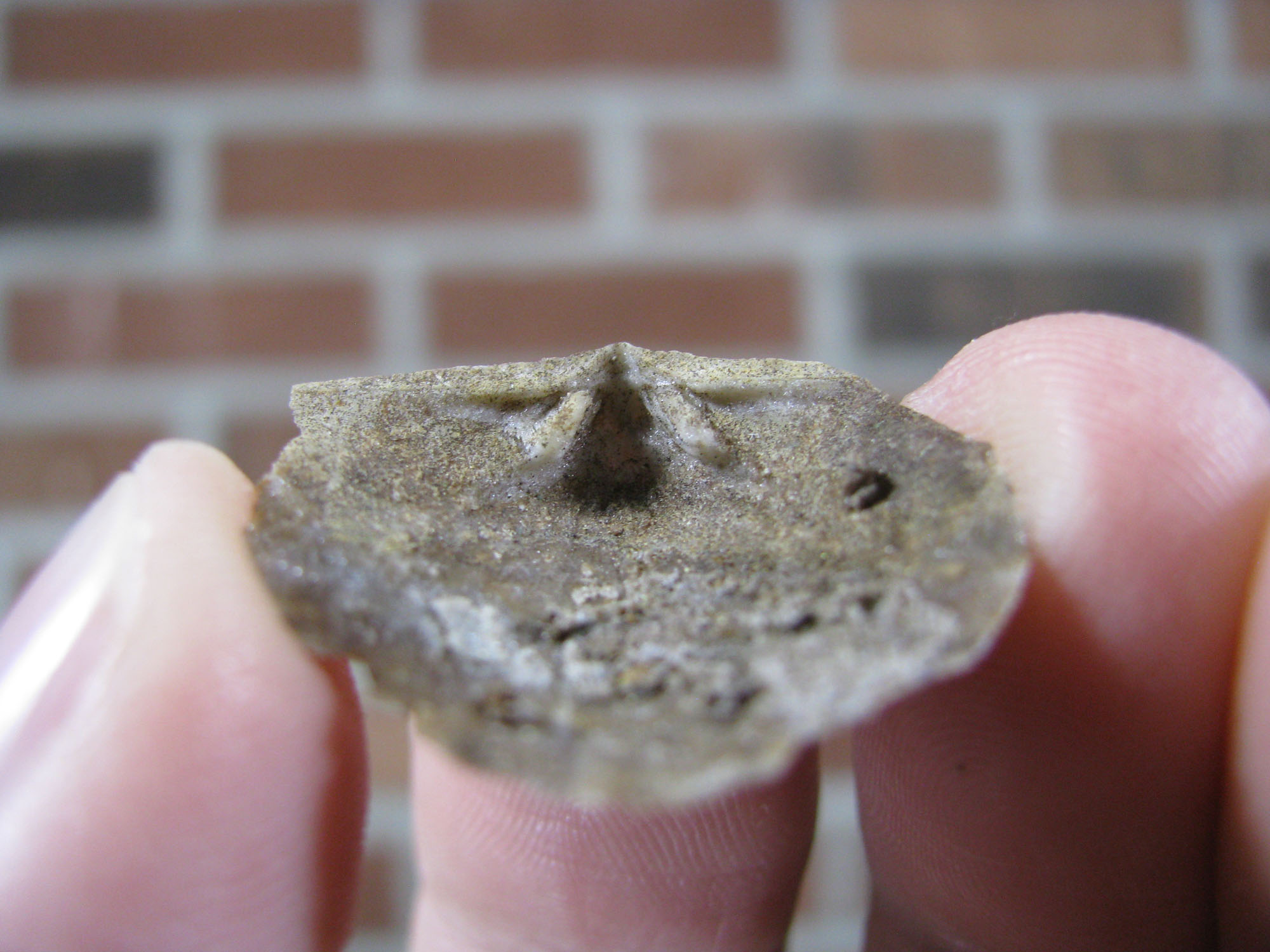
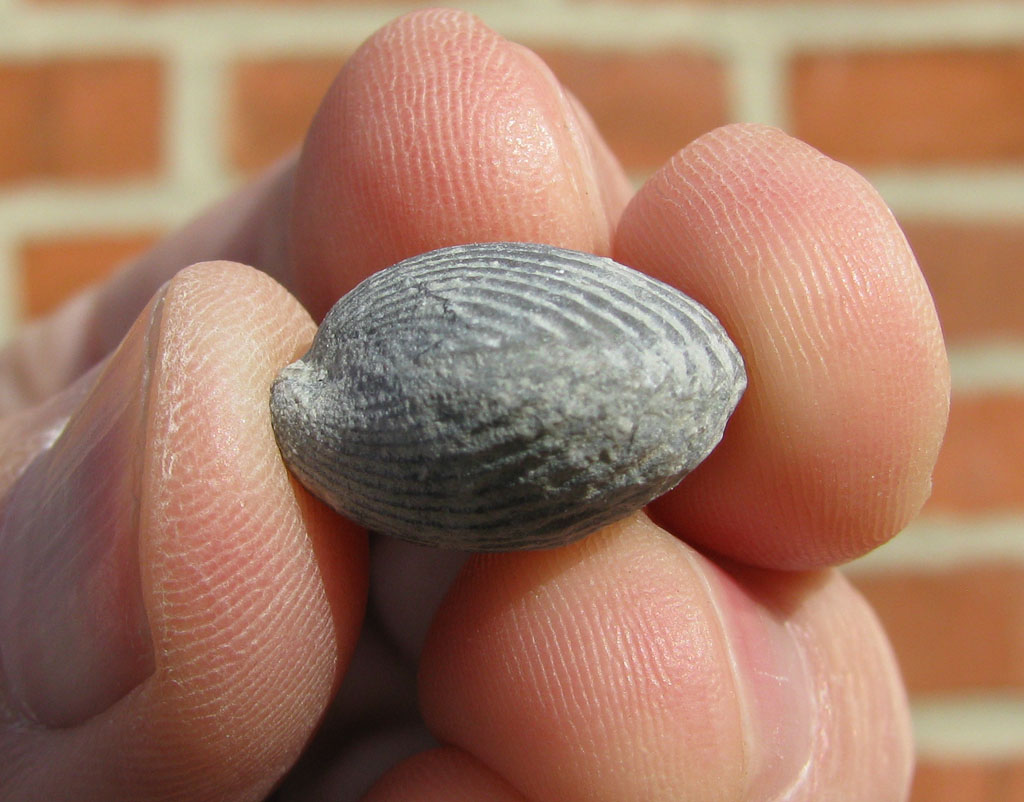
Hadrophyllum orbignyi coral from the Speed Limestone

 There is a small "button" coral that can be found in the Devonian rocks near Louisville, KY.  It's called Hadrophyllum orbignyi and is most commonly found in the Speed Limestone formation. I've received a number of specimens from my friend Mike P. that he has collected, but I have not found any myself.  

Below are two specimens that are preserved by quartz. The preservation process is not terribly good but the basic features of the coral are preserved. You can recognize the septa and fossula (the wider gap at 12 o'clock in the first specimen). Fossula is from the latin word for ditch or trench which is a good description of the feature in rugose corals.

I call these types of fossil coral "buttons" because they are small, round and have a flat profile.  Compare these to the species Microcyclus thedfordensis that is found in the Arkona formation of Canada.

 Specimen #1 dorsal surface

Ventral surface
Profile

Specimen #2 dorsal surface

Profile
Ventral surface
 

These specimens were found in Clark County, Indiana near Louisville, KY. They come from the Speed Limestone which is middle Devonian in age (Givetian stage). Thanks to Mike P. for the specimens!

Thursday, August 13, 2020

Mound like Bryozoan from the Speed Limestone

I've found a few specimens of what appears to be a mounding Bryozoan that lived during the Devonian period during collecting trips to the Louisville, KY area. I've also received specimens from Mike P. via exchanges and he has them labelled as "Eridotrypa sp. from the Speed limestone".  The Speed limestone is a member of the Silver Creek formation (or North Vernon/Sellersburg limestone depending on the resource you look at) and is above the Jeffersonville limestone. 

I am unsure of the actual ID for these specimens as Eridotrypa is a genus known from the Ordovician and Silurian. I believe this is an example of an order Trepostomata type bryozoan (as is Eridotrypa) but the preservation is not good enough to really narrow the ID.  I'd suggest that an ID of Monotrypa sp. (which forms hemispherical colonies with flat bases and is known from the lower to middle Devonian of New York) would be more appropriate for the age of the specimens but for now they will have a question mark on my labels.

All the specimens I have are very light with some clearly being hollow as a rattling can be heard inside when turned.  It is my interpretation that these are partially preserved examples with the exterior being the most extensively replaced. These likely represent casts of the actual calcitic fossils that dissolved away during the silicification process. Since surface details are lacking, the original skeletons could also have been tumbled on the seafloor prior to fossilization.

A clutch of specimens that all show similar features

Specimen #1 - side view


Dorsal surface of the specimen showing the small corallites

Another side view that shows the layering and cells of the colony

Bottom of the specimen which has features that could either be from growth over a non level surface, or dissolution features prior to silicification of the fossil.

Specimen #2


Specimen #3


I received these specimens via trade. They come from a quarry in Clark County, Indiana which is near Louisville, KY. The fossils are dated (roughly) to the middle Devonian (Givetian stage).

Sunday, August 9, 2020

Tropidoleptus carinatus brachiopod from the Sellersburg Limestone

Today's specimen is Tropidoleptus carinatus from the Sellersburg limestone of Indiana. The Sellersburg limestone is middle Devonian in age (Givetian stage) and lies above the Jeffersonville formation.  The fossils below are from two different individuals but show both valves of T. carinatus. I purchased these specimens from a seller on E-bay some years ago.

Brachial valve dorsal surface

Brachial valve ventral surface

View of the rear of the brachial valve with the attachment points for the brachioles shown

Pedicle valve dorsal surface

Pedicle valve ventral surface


Left side profile of pedicle valve

Posterior of pedicle valve

Anterior of pedicle valve

T. carinatus is very common in the middle to upper Devonian aged rocks of North America. Some of the best specimens I have found come from the Kashong shale member of the Moscow formation in New York.  I have never found examples of the species with individual valves before though, so these are special specimens in my collection.

These specimens come from the Sellersburg Limestone located in Clark County, IN which is near Louisville, KY and is dated to the Devonian period (Givetian stage).

Wednesday, August 27, 2014

Parmorthis waldronensis brachiopod from the Waldron Shale

Another brachiopod from the diverse Waldron Shale (Silurian, Wenlock epoch) is Parmorthis waldronensis. It reminds me a little bit of Pseudoatrypa reticularis of the Devonian (because of one valve being convex and the other nearly flat) and Dalmanella multisecta of the Ordovician (because of the shape of the interarea). It also has a strong resemblance to Resserella elegantula specimens that I've found in the Irondequoit limestone near Lockport, NY.

Brachial valve
Anterior
Pedicle valve
Posterior
Profile

It turns out that a little research on the Fossilworks.org website (formerly Paleodb.org) shows that Parmorthis is a synonym of Resserella. So the resemblance is because they are one in the same. I will have to update the label to indicate Resserella waldronensis.

Monday, August 25, 2014

Schuchertella subplana from the Waldron Shale of Indiana

Schuchertella subplana is a relatively flat brachiopod but it is not a Strophomenid because both of it's valves are convex (rather than one being convex and the other concave). The specimen below comes from the Waldron Shale (Wenlock Epoch) in Bartholomew Co., IN.

Brachial valve
Anterior
Pedicle valve
Posterior
Profile


Saturday, August 23, 2014

Meristina maria brachiopod from the Waldron Shale

Since I mentioned the brachiopod genus Meristina in my last blog post I figured I should at least post an example of one. This is Meristina maria from the Waldron Shale of Shelby County, IN. It has a very deep sulcus and the pedicle valve is not as long as the brachial valve.

Brachial valve
Anterior
Pedicle valve
Posterior
Left profile
Right profile

I purchased this fossil from a dealer along with a number of other fossils from the Waldron shale. The Waldron shale is Silurian aged and dated to the Wenlock epoch.

Monday, July 14, 2014

Homoeospira evax brachiopod from the Waldron Shale

Homoeospira evax is a brachiopod that I mistook for Atrypa until I really got down to look at it. This specimen, from the Waldron Shale of Clark County, Indiana (Silurian, Wenlock epoch, Sheinwoodian to Homerian stage), is typical of the species. While it does have the radiating ribs that you see on Atrypa it also has a prominent beak and narrower hinge line. Additionally H. evax does not have concentric growth lines on the surface of it's shell like Atrypa does.

Brachial valve
Anterior
Pedicle valve
Posterior
Profile

Thursday, May 29, 2014

Paulicystis sp. Cystoid from Indiana

I recently acquired this Cystoid specimen called Paulicystis densus at a fossil show. It's from the Osgood shale (Silurian, Telychian to Sheinwoodian stage) and was collected in Napoleon, Indiana. I've collected at the same site before but I've only found Holocystites type cystoids. Paulicystis is a new genus that was named in 2011 by T.J. Frest and H.L. Stimple (honoring C.R.C. Paul) based on material donated by Don Bissett. The former two coauthored a paper but it never saw publication until 2011. Sadly both had passed before this occurred. The paper was finally completed in 2011 by C.R.C. Paul and published by the Paleontologial Research Institute in the Bulletins of American Paleontology, Number 380, March 2011. Click on the link to download a copy for yourself.


The opening is the picture below is the oral area
And this is the Anal opening.

These next two pictures show the base of the Cystoid which shows that it had a very wide attachment to the seafloor.