Wednesday, December 14, 2011

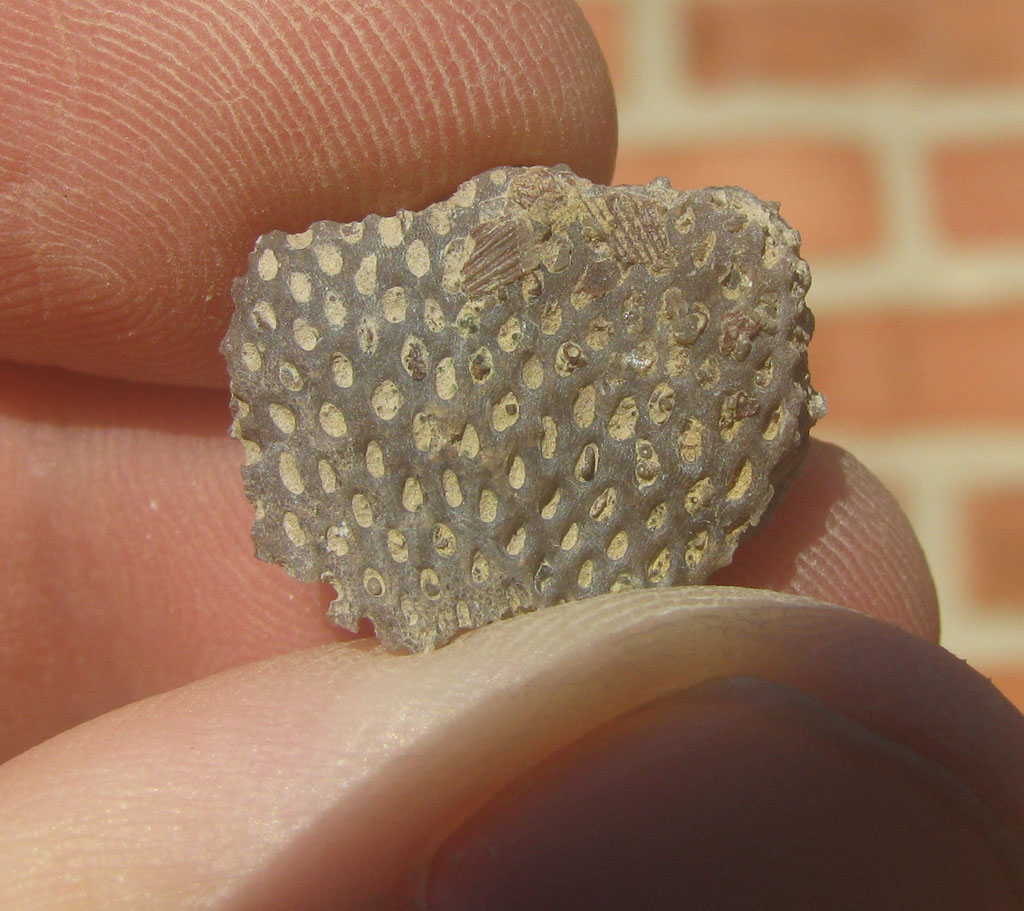
Chilotrypa ostiolata from Lockport, NY

One of the most common Bryozoans that I found at the Lockport, NY exposure of Irondequoit limestone Rochester Shale is Chilotrypa ostiolata. The ID is based on specimens displayed at the Primitive Worlds website and the book "The Clinton of Western and Central New York" by Tracy Gillete (1947). Chilotrypa ostiolata is a thin, narrow branching bryozoan. Most pieces I find are loose and broken from the main colony.

This first specimen reminds me of a leg bone from some animal.


Note the structure of the individual zooecia where a single polyp lived. They are shaped kind of like a balcony on the side of a tower so the animal could lean out and spread its lophophore tentacles to catch passing food.

Some more individual pieces.

Here are a couple of slabs of the Irondequoit limestone Rochester Shale that have branches of Chilotrypa ostiolata preserved on them.

Note the Crinoid stem among the debris. The fact that most of the individual pieces of Chilotrypa ostiolata show evidence that there were broken before burial indicates that this is likely a storm deposit or possibly a lag deposit.


The Irondequoit limestone Rochester Shale is Silurian in age (Wenlock series, Sheinwoodian stage).

Monday, December 12, 2011

Icthyocrinus (?) from Lockport, NY

This is a partial crinoid that I found eroded out of the Irondequoit limestone Rochester Shale (Silurian, Sheinwoodian stage) near Lockport, NY. It is only recognizable as a Crinoid on the one side (which was likely face down on the seafloor) as the other side is just a collection of dis-articulated bits.


Based on the picture that I found on the Primitive Worlds website of Icthyocrinus I think I have similar remains. Mine is somewhat less complete though. :)

Saturday, December 10, 2011

Plectatrypa from Lockport, NY

When exploring a new rock formation and picking up fossils you often find some that are somewhat abundant but you have no idea what they are. It then follows that you spend time asking others for info or searching through books trying to find a match. The specimen below, from the Irondequoit limestone Rochester Shale near Lockport NY, is just such a troublesome fossil. While it has required some research to find information about the fossils that are found within the Irondequoit limestone Rochester Shale are well documented. This does not always cover every instance though and it took until I read through a book called "Paleocommunities—A Case Study from the Silurian and Lower Devonian", A.J. Boucot and J.D. Lawson, editors, 1999, Cambridge University Press, Cambridge. It had a chapter that described the brachiopod community that can be found within the Irondequoit limestone/Rochester Shale. In the list it has Plectatrypa sp. as a common member but I was having a hard time finding any pictures of specimens to compare mine to. Then I stumbled across this page (plates Plates XVIII & XXII) which is part of the "Paleontology of Kentucky" by Willard Rouse Jillson that was published in 1931. The examples illustrated looked similar to what I had found and were from the Silurian (as is the Irondequoit limestone Rochester Shale which is falls within the Wenlock series, Shienwoodian stage) I think I have a match.

Which brings us to the specimen that I found and am naming Plectatrypa sp.

Pedicle valve

Anterior

Brachial valve

Posterior

Profile

I think this specimen is also a Plectatrypa.
Pedicle valve

Anterior

Brachial valve

Posterior

Profile


Hopefully the research I have done resulted in the correct name being assigned to the fossil and will be helpful for others searching to examples.
Thursday, December 8, 2011

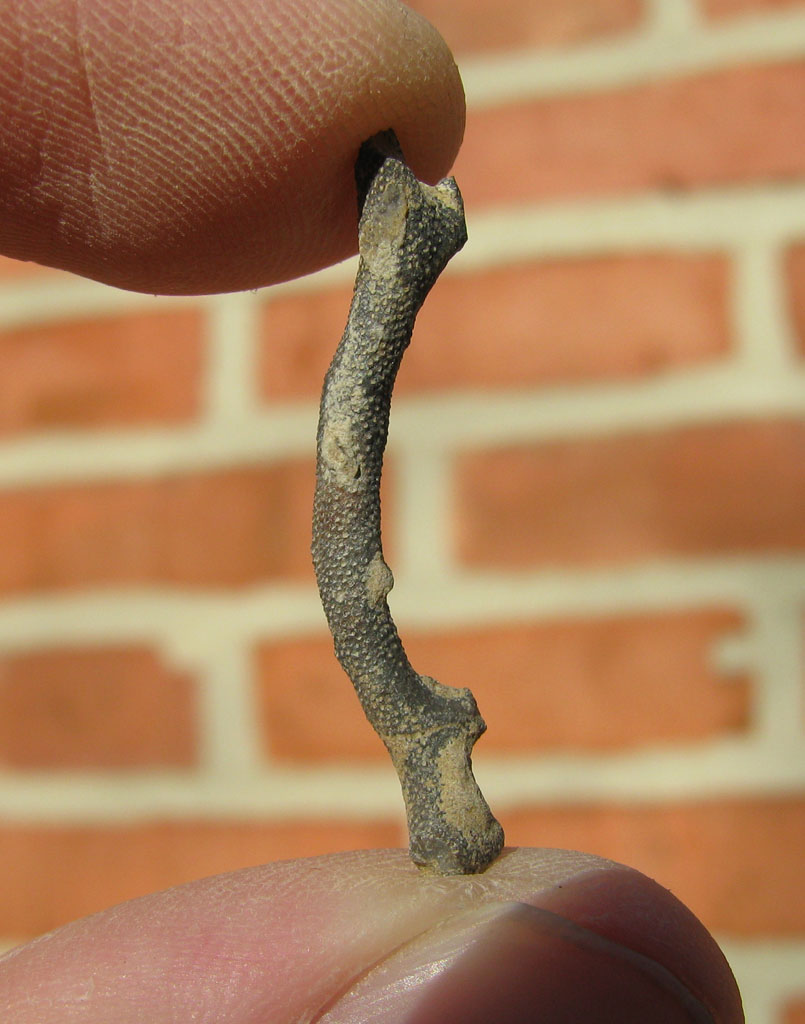
Fenestella elgans from Lockport, NY

The website Primitive Worlds has been a great resource for me in identifying fossils that I've found within the Irondequoit limestone Rochester Shale. On their Bryozoan page they have fossils that they call Fenestella elgans. This seems to match specimens that I have found near Lockport, NY.

Here is a large specimen which is unusual since these lacy fan like Bryozoans often break apart easily before burial.

Here is a closer view where you can see the detailed surface on the back of the colony skeleton.

It amazes me that the structure is so regular. With the skeleton being made up of hundreds of tiny individual polyps how were they able to coordinate growth?

Another specimen to show you but this one actually has the individual zooecium visible.


The Irondequoit limestone Rochester Shale is Silurian in age (Wenlock series, Sheinwoodian stage). 

Tuesday, December 6, 2011

Chasmatopora asperato-striata from Lockport, NY

Another Bryozoan that I've been able to identify from fossils I found near Lockport, NY in the Irondequoit limestone Rochester Shale,  is Chasmatopora. This genera has a similar lacy fan structure to it like the more commonly recognized Fenestella but one of the differences is the shape of the gaps within the fan. In Chasmatopora the openings are rounded to ellipsoid while in Fenestella they are rectangular. This is not a trait which should be used to differentiate between genera in every instance however it works well for the fauna of the Rochester shale.

Specimen #1


Specimen #2

Closeup of the above specimen. This is the back side of the colony and you can see striations running along the length of the segments.

While the last two specimens were somewhat isolated, this third specimen is still in the matrix. You can see all the debris it has been swept up with which includes Crinoid columnals, pieces of Bryozoans, Brachiopods, Trilobites and Ostracods. Due to the broken nature of most of the fossils in the rock I would think they were accumulated and deposited after a storm event.

The Irondequoit limestone Rochester Shale is Silurian in age (Wenlock series, Sheinwoodian stage). This lead me to ID the specimens above as Chasmatopora asperato-striata after viewing the Primitive Worlds website here. I have also been able to independently confirm that this species can be found within the Irondequoit limestone and Rochester Shale after reading "The Clinton of Western and Central New York" by Tracy Gillete (1947).