Friday, January 31, 2020

Schizotreta pelopea brachiopod from the Coburg formation

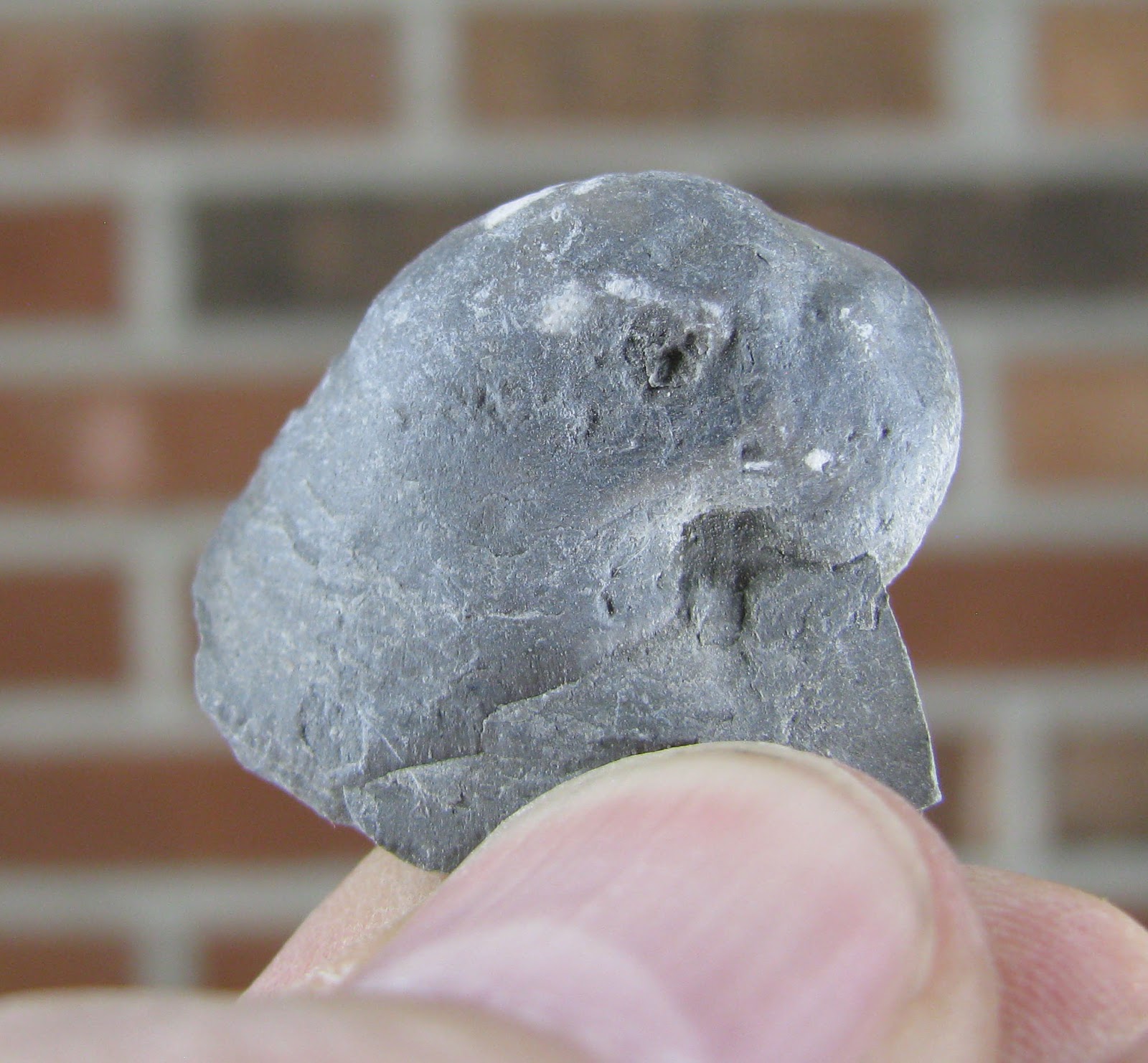
This is the last post dealing with fossils I've found in the Coburg formation for now. As I have only been to the quarry a few times, and the Coburg does not yield many loose fossils, I have only a small percentage of the fauna that are known from the formation. An inarticulate brachiopod is the focus of today's post but I am not sure of the name. From the look of it I would say Orbiculoidea sp. but William Hessin's book "South Central Ontario fossils" does not list that genus. Instead he lists a similar species called Schizotreta pelopea. 


The Coburg formation is Ordovician in age (late Ordovician, Katian/Mohawkian stage).
This fossil was collected from the St. Mary's Limestone Quarry in Bowmanville, Ontario. I used William Hessin's book "South Central Ontario Fossils", 2009, Self Published, pg. 120 to help identify it.

Wednesday, January 29, 2020

Lingula coburgensis Brachiopod from the Coburg formation

Lingula is a genus of Brachiopods that is extant today with fossils that have been found back to the Cambrian period. Over that time they show very little change with only minor variation on the theme. Why change something if it's already working?!

Here is a specimen of Lingula coburgensis from the Coburg formation.  I found it while on a field trip to the St. Mary's Cement Quarry in Bowmanville, Ontario, Canada. The shell is phosphatized and so retains some color while other brachiopod shells, made of Calcite or Aragonite, loose their color when fossilizing. Specimens of this species are fairly common in the Coburg Fm. but they are delicate and often break while trying to extract them from the hard limestone matrix. The specimen below shows some damage including a rectangular window of shell that is missing. Otherwise the fossil is very nice with a deep mahogany color and thin concentric growth lines.  It's embedded in the matrix so I don't have a way to show my usual view of the shell from different perspectives. You will have to make due with some angle shots that show just how flat the shell is.


The Coburg formation is Ordovician in age (late Ordovician, Katian/Mohawkian stage).
This fossil was collected from the St. Mary's Limestone Quarry in Bowmanville, Ontario. I used William Hessin's book "South Central Ontario Fossils", 2009, Self Published, pg. 117 to help identify it.
Monday, January 27, 2020

Rafiniesquina robusta Brachiopod from the Coburg Fm.

I have found a number of Strophomenid type brachiopods on my trips to collect in the St. Mary's Cement Quarry, but it is hard to distinguish between them some times. The two specimens below I believe are Rafiniesquina robusta, based on William Hessin's book, "South Central Ontario Fossils". The shell is a good size and highly convex with the margins extending perpendicularly to the valves for a good distance. Unfortunately the pedicle valve is not visible or I could look for other unique features to help identify the fossil.

Specimen #1 pedicle valve

Specimen #1 anterior

Specimen #1 left profile

Specimen #1 right profile


Specimen #2 pedicle valve

Specimen #2 anterior

Specimen #2 left valve

Specimen #2 right valve


The Coburg formation is Ordovician in age (late Ordovician, Katian/Mohawkian stage).
These fossils were collected from the St. Mary's Limestone Quarry in Bowmanville, Ontario. I used William Hessin's book "South Central Ontario Fossils", 2009, Self Published, pg. 127-128 to help identify them.

Saturday, January 25, 2020

Flexicalymene sp. Trilobite from the Coburg Fm.

Next to Isotelus, Flexicalymene is the most common trilobite in the upper Ordovician. The same is not true in the Coburg formation as I have found only a few parts over the trips I've made. Below is a small, partially enrolled specimen that, unfortunately, is missing part of the cephalon. Based on William Hessin's book, "South Central Ontario Fossils", I think it may be Flexicalymene croneisi.


And this is an isolated pygidium.

The Coburg formation is Ordovician in age (late Ordovician, Katian/Mohawkian stage).
These fossils were collected from the St. Mary's Limestone Quarry in Bowmanville, Ontario. I used William Hessin's book "South Central Ontario Fossils", 2009, Self Published, pg. 172 to help identify them.

Thursday, January 23, 2020

Sinuites angularis gastropod from the Coburg Formation

Gastropod fossils from the Paleozoic tend to not have any shell preserved with some exceptions to that rule. In this case, it is true. Sinuites angularis is a common gastropod from the Coburg formation and is a planispiral snail. That means that it's shell forms a spiral that wraps upon itself but stays in the same plane (it doesn't curve off in one direction or another. Generally these look like rounded blobs when found in the field and some searching will yield good specimens.  As it is so blob like, the pictures below are the best I can do to try and show you the specimen from different angles.


The Coburg formation is Ordovician in age (late Ordovician, Katian/Mohawkian stage).
This fossil was collected from the St. Mary's Limestone Quarry in Bowmanville, Ontario. I used William Hessin's book "South Central Ontario Fossils", 2009, Self Published, pg. 135 to help identify it.