Wednesday, September 10, 2014

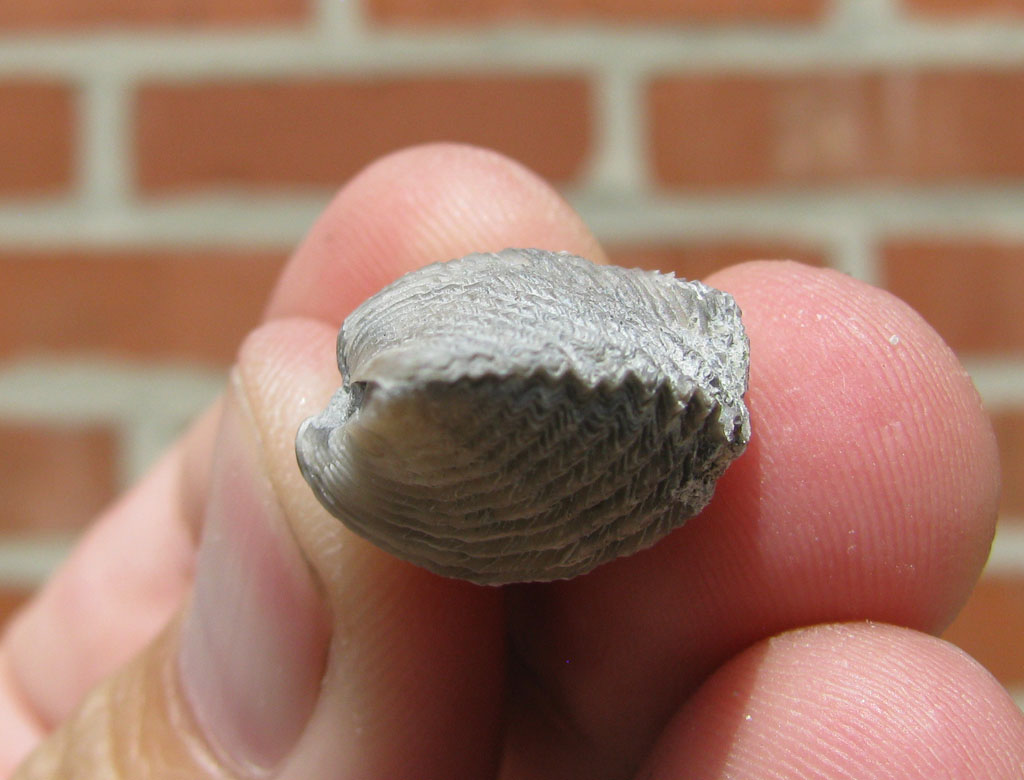
Mucrospirifer prolificus brachiopod from the Silica Shale

After M. mucronatus, the next most common species of Mucrospifier in the Silica Shale (Devonian, Givetian stage) is M. prolificus. It has a somewhat ornate shell exterior like M. mucronatus but the interarea is wider (because the beak of the pedicle valve doesn't curl quite as much). The specimen below comes from Sylvania, OH.


Compare this specimen to M. thedfordensis and M. arkonensis from Arkona, Canada, and Eleutherokomma diluvianoides from Poland

Monday, September 8, 2014

Mucrospirifer mucronatus brachiopod from the Silica Shale

Here is an example of the somewhat ubiquitous Mucrospirifer mucronatus from the Silica Shale (Devonian, Givetian) at Milan, MI. Mucrospirifer is a prolific member of many mid-Devonian units and are something of a index fossil.

Brachial valve
Anterior
Pedicle valve
Posterior
Profile

M. mucronatus is noted for the somewhat ornate exterior shell surface and obvious growth lines.

Compare this specimen to M. thedfordensis and M. arkonensis from Arkona, Canada, and Eleutherokomma diluvianoides from Poland

Saturday, September 6, 2014

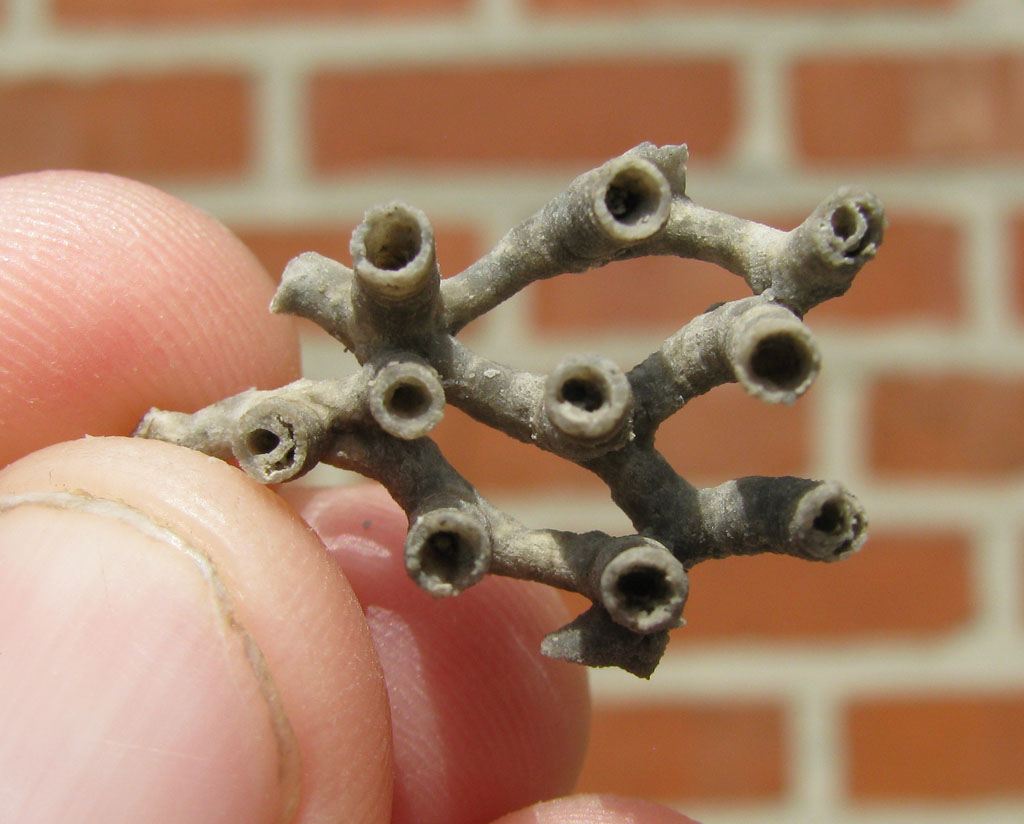
Aulocystis auloporidea coral from the Centerfield limestone

One of the sites I visit, that exposes the Centerfield limestone, has chunks of limestone in which the fossils contained within are partially replaced by Quartz. The easiest way to expose these fossils is by dissolving the surrounding limestone with acid. The specimen below is from the residue of such a piece of limestone. It is an interconnected series of coral calices that I believe is Aulocystis auloporideas. I made the ID after visiting this page at the Falls of Ohio website, but it seems to disagree with a specimen that I have from the Silica Shale. So I will keep the label as is for now in hopes of getting a more accurate ID in the future.


The specimen above came from limestone that belonged to the Centerfield member of the Ludlowville formation (Devonian, Givetian stage) near East Bethany, NY.

Thursday, September 4, 2014

Pleurodictyum amazonicum coral from Bolivia

Pleurodictyum is a favorite coral of mine and now I have specimens from the Devonian of Bolivia in my collection. Below are three examples of Pleurodictyum amazonicum corals from the Belen formation. All three are casts of the original fossils found in nodules. The original calcium carbonate skeletons have long since dissolved away and only the mud filled voids are preserved. Despite this the fossils are still identifiable due to the somewhat unique growth pattern of the genus.

Specimen #1


Specimen #2


Specimen #3 - This one is nicely preserved and you can see some of the interconnecting mural pores.


These fossils have a very similar preservation to those that I find in my local Mahantango Formation here in Pennsylvania. I have also found Pleurodictyum in the Wanakah Shale, Kashong Shale and Jeffersonville Limestone.

All three specimens shown above come from then Belen formation (Devonian, Emsian stage) south of the capitol of Boliva, La Paz.

Tuesday, September 2, 2014

Platyceras bistrami gastropod from Bolivia

This is a gastropod fossil called Platyceras bistrami from the Belen formation (Devonian, Emsian stage) of Bolivia. It seems to be distinguished from other species by the undulating surface of it's shell. This is just a cast of the shell but the ripples are preserved well. Also, P. bistrami (when I write it that way it makes me think of Pastrami) has a tighter coil to it's shell than other species.


This specimen was found south of La Paz, Bolivia and I purchased it off of E-bay.