This next Trilobite I purchased from Sahara Imports via their E-bay page. It's an unusual trilobite called Otarion (aka Cyphaspis) sp. with stalked eyes and spines. The prep is a little rough but the fossil is 100% real with no restoration. No other locality info was included except for "Devonian, Morocco".
It's very hard to track down any locality information for fossils from Morocco, but I found a paper called "Trilobites from the latest Frasnian Kellwasser Crisis in North Africa (Mrirt, central Moroccan Meseta)" by Raimund Feist, Acta Palaeontologica Polonica 47 (2), 2002: 203-210 that indicates a species of the Otarion genera being found in the Late Fransian of Morocco.
Tuesday, December 11, 2012
Sunday, December 9, 2012
Cheirurus (Crotalocephalus) gibbus from Morocco
Continuing on the theme of Moroccan Trilobites, there is another specimen that I received from my friend Jenaro: Cheirurus (Crotalocephalus) gibbus.
You can see some of the restoration work on the Cephalon but otherwise this is a nice specimen.
From what I can find on Paleodb.org, Cheirurus (Crotalocephalus) gibbus lived in the early Devonian. The label that came with the specimen indicates it comes from Mt. Issoumour near Alnif, Morocco.
You can see some of the restoration work on the Cephalon but otherwise this is a nice specimen.
From what I can find on Paleodb.org, Cheirurus (Crotalocephalus) gibbus lived in the early Devonian. The label that came with the specimen indicates it comes from Mt. Issoumour near Alnif, Morocco.
Friday, December 7, 2012
Phacops speculator from Morocco
Here is another specimen that I received in trade from my friend Jenaro, A Phacops speculator. Phacops is a genera that is well know to collectors here in the US. Phacops rana is the most common species found in Devonian aged rocks in my area like these from the Mahantago Formation or these from the Silica Shale.
They have sculpted this fossil so that it is raised up on a sort of plinth.
Enlarged glabella with the holochroal compond eyes are key features of the a Phacops trilobite
You'll notice that there are tool marks seen all over the specimen. I don't mind this as it shows the specimen was not overly restored.
My thanks to Jenaro for sending me this wonderful specimen! It comes from the AM Limestone (Devonian) at Mount Issoumour near Alnif, Morocco.
Wednesday, December 5, 2012
The good and the bad of Moroccan Trilobites
I have two specimens of the Trilobite species Hollardops mesocristata from the Devonian of Morocco. The first I purchased many years ago without much knowledge of the processes involved in extracting and preparing the fossils.
As you can see it is very rough
Portions are obviously reworked rock that have been purposely colored to look like it was part of the Trilobite.
Especially on the left side of the Cephalon
While the right side is a bit better looking.
The Pygiduim is an atrocious mess
Then recently I was able to trade with my friend Jenaro over in Spain and he sent me the specimen below. It is a much better quality specimen and I'm very pleased to have it in my collection.
The left side of the Cephalon and eye are intact with some minor restoration
As is the right side. Note the thin cracks in the rock that show it's been glued back together. Since the way these fossils are found is by smashing apart rocks, some restoration is to be expected.
The position of the fossil is somewhat dynamic looking a little like a predator that is hidden just beneath the sediment surface.
The pygidium is much nicer as well with only minor restoration marks seen
My thanks to Jenaro for sending me this wonderful specimen! The second specimen comes from the AM Limestone at Mount Issoumour near Alnif, Morocco. Both fossils are from the Devonian but I can't find any information to help narrow down what stage they lived in.
Monday, December 3, 2012
Phricodothryis perplexa from Texas
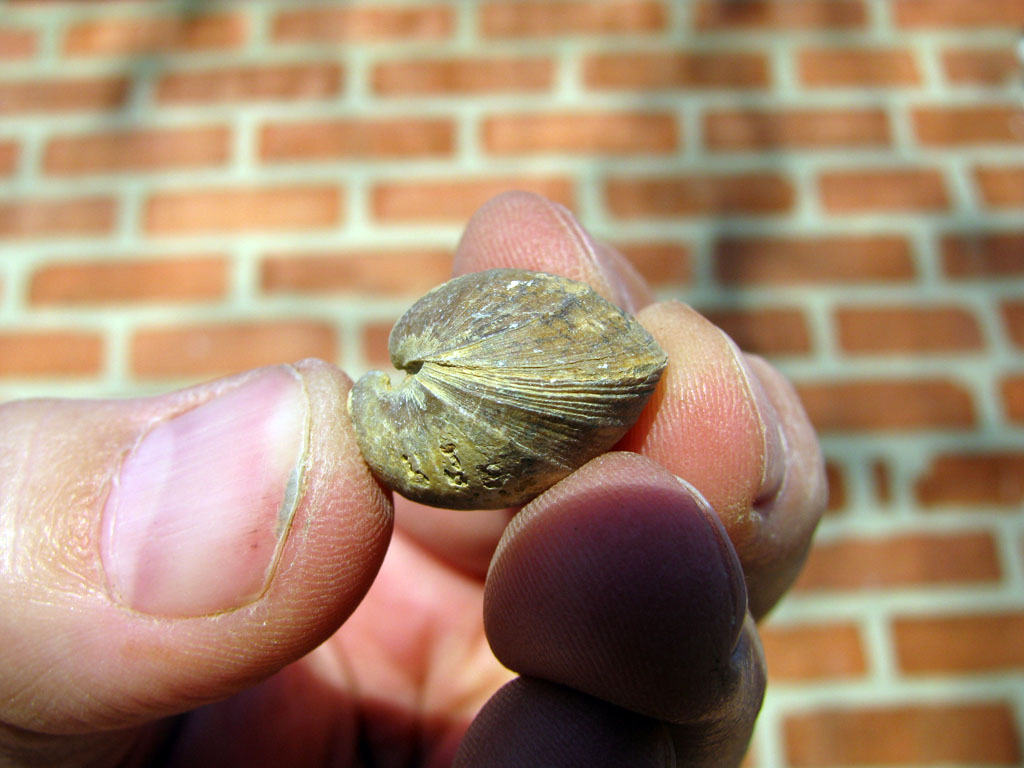
Today's fossil is Phricodothyris perplexa from the Pennsylvanian aged Mineral Wells formation of Palo Pinto, Texas. It reminds me of the genera Athyris but with a much more exaggerated beak on the pedicle valve.
Brachial valve
Anterior
Pedicle valve
Posterior
Profile
Brachial valve
Anterior
Pedicle valve
Posterior
Profile
Subscribe to:
Posts (Atom)