Friday, April 19, 2013

Pseudoatrypa and Independatrypa brachiopods from Iowa

The ubiquitous Pseudoatrypa makes an appearance in the rocks of the late Devonian (Fransian stage) Lime Creek formation of Iowa. It gets fairly large, as is typical of the genera,and a little wider than some.

Brachial valve
Anterior
Pedicle valve
Posterior
Profile
Different specimens to show variety of sizes and shape.

There is another species which looks very similar to Pseudoatrypa called Independatrypa independensis which has since been reclassified as Desquamatia (Independatrypa) independensis by Williams et al. in 2002. It's found in the Cedar Valley formation which is late Givetian stage of the Middle Devonian in Iowa.

Brachial valve
Anterior
Pedicle valve
Posterior
Profile

Some grew to very large proportions

Brachial valve
Anterior
Pedicle valve
Posterior
Profile

Sample of the largest Desquamatia (Independatrypa) independensis I have with a typical Pseudoatrypa.


All the specimens shown above were purchased from this seller on E-bay.

Wednesday, April 17, 2013

Theodossia hungerfordi brachiopod from Iowa

Another brachiopod from the Lime Creek Formation is Theodossia hungerfordi. From what info I can find (primarily Paleodb.org) Theodossia is a genus that is confined to the late Fransian stage of the Devonian. This is a fairly common species in the Lime Creek Fm. as is evidenced by the many specimens seen in auctions and at fossil shows.

Brachial valve (with a little dent in it)

Anterior

Pedicle valve

Posterior

Profile

A sampling of different sized shells


The above specimen came from the Lime Creek Formation exposed in an old quarry that has been converted into a tourist park called the Fossil and Prairie Park Preserve near Rockford, Iowa.

Monday, April 15, 2013

Riqauxia orestes brachiopod from Iowa

Here is another species of Brachiopod I picked up from E-bay. The label that came with them said they were "Spirifer whitneyi" from the Lime Creek Formation (U. Devonian)near Rockford, Iowa. However a quick perusal of the "Index Fossils of North America" does not show that species as occurring in the Devonian. My friend Nathan recently posted a series of pictures of Brachiopods that he found in Rockford, Iowa and were IDed by an expert. About half way through the list I found Riqauxia orestes that seemed to match the specimen I had:

Brachial valve

Anterior

Pedicle valve

Posterior

Profile

A selection of specimens of different sizes.


The above specimens came from the Cerro Gordo member of the Lime Creek Formation, which is Upper Devonian (Fransian) in age.

Saturday, April 13, 2013

Strobilocystites polleyi Cystoid from Palo, Iowa

Strobilocystites polleyi is the first cystoid that I have from the Devonian. I won it from an auction on E-bay and it fits in well with my collection of fossils from the Cedar Valley Formation of Iowa.

It is composed of many large plates with a single Aulacophore present about 3/4 up the side of the body. Cystoids are odd echinoderms that I don't understand very well so I may have the terminology of the anatomy incorrect.
Side views


This specimen came with a label that states it came from the Cedar Valley Formation (Devonian, Givetian) near Palo, Iowa. I found an old excerpt called "Echinoderms of the Iowa Devonian" by A. O. Thomas that discuss' this species and others found in Iowa. I'm not sure what publication it was part of originally.

Thursday, April 11, 2013

Hystricina trulla brachiopod from Independence, Iowa

Hystricina trulla is another wavy/spiny surfaced brachiopod like Spinatrypa. I liken it to Pseudoatrypa because it has a similarly deep, convex brachial valve.

Brachial valve

Anterior

Pedicle valve

Posterior

Profile

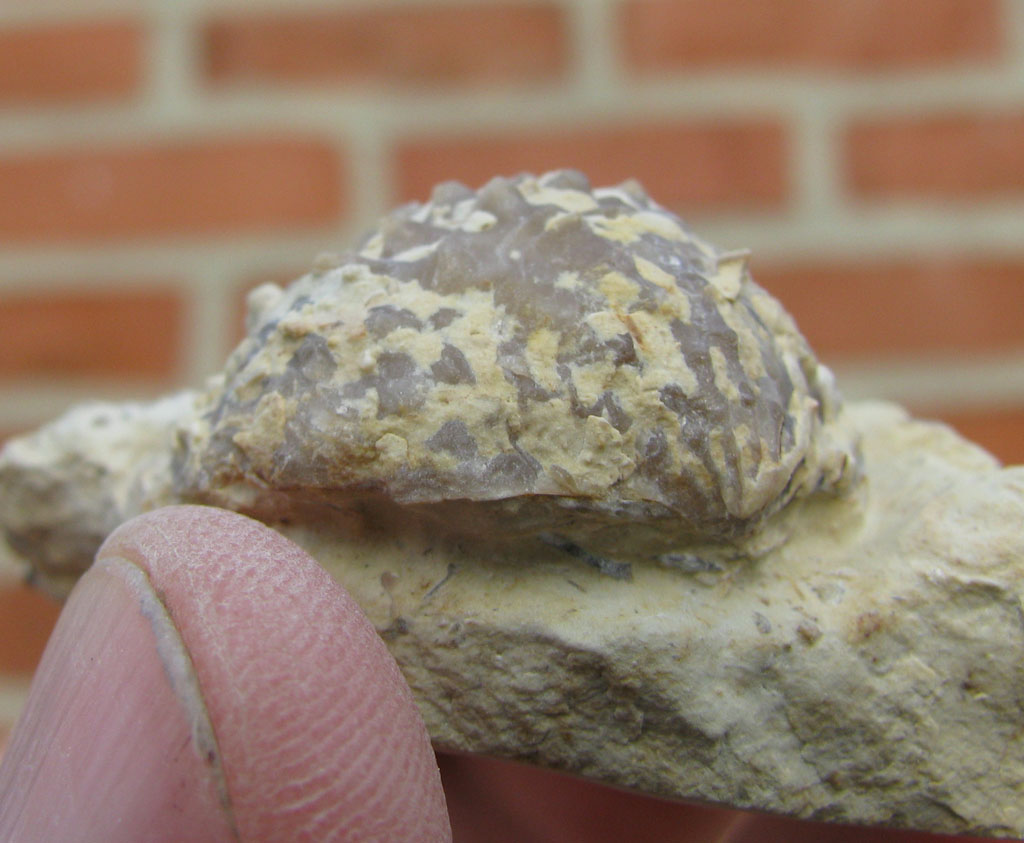
This specimen is still partially embedded in the matrix.


The specimens shown above came from the Cedar Valley formation (Devonian, Givetian stage) near Independence, Iowa. I purchased both specimens from this seller on E-bay.