Showing posts with label Chainman formation. Show all posts

Wednesday, February 3, 2016

Spiriferellina ? or Punctospirifer? brachiopod from the Chainman formation of Utah

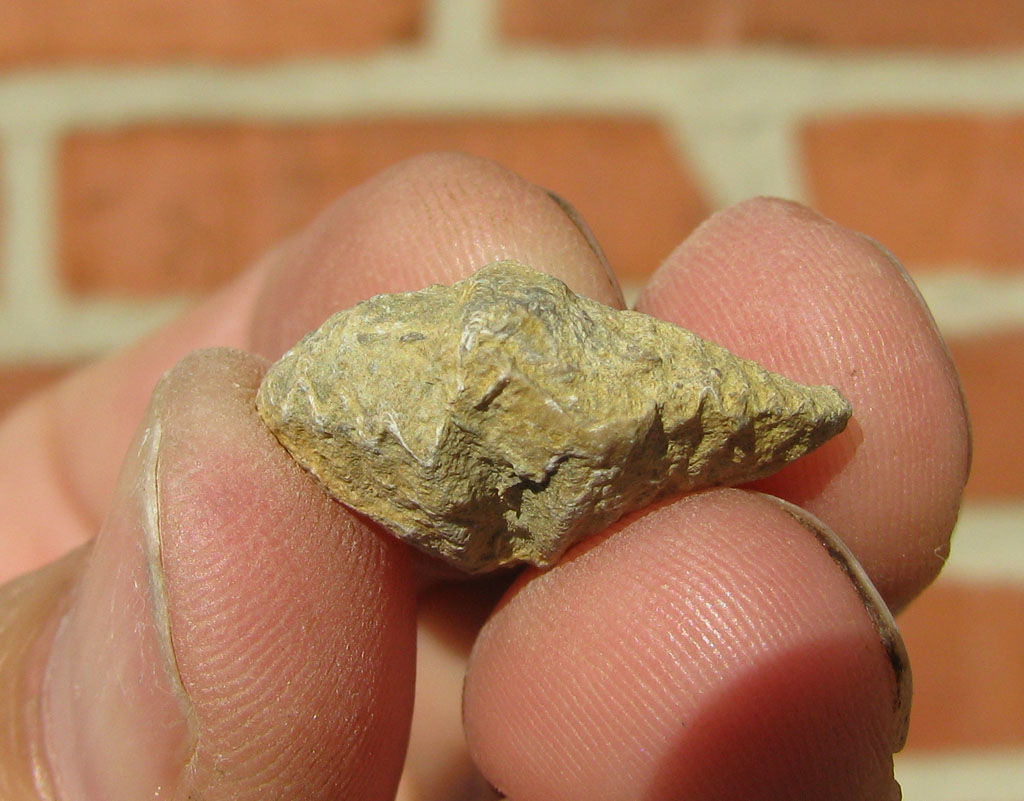
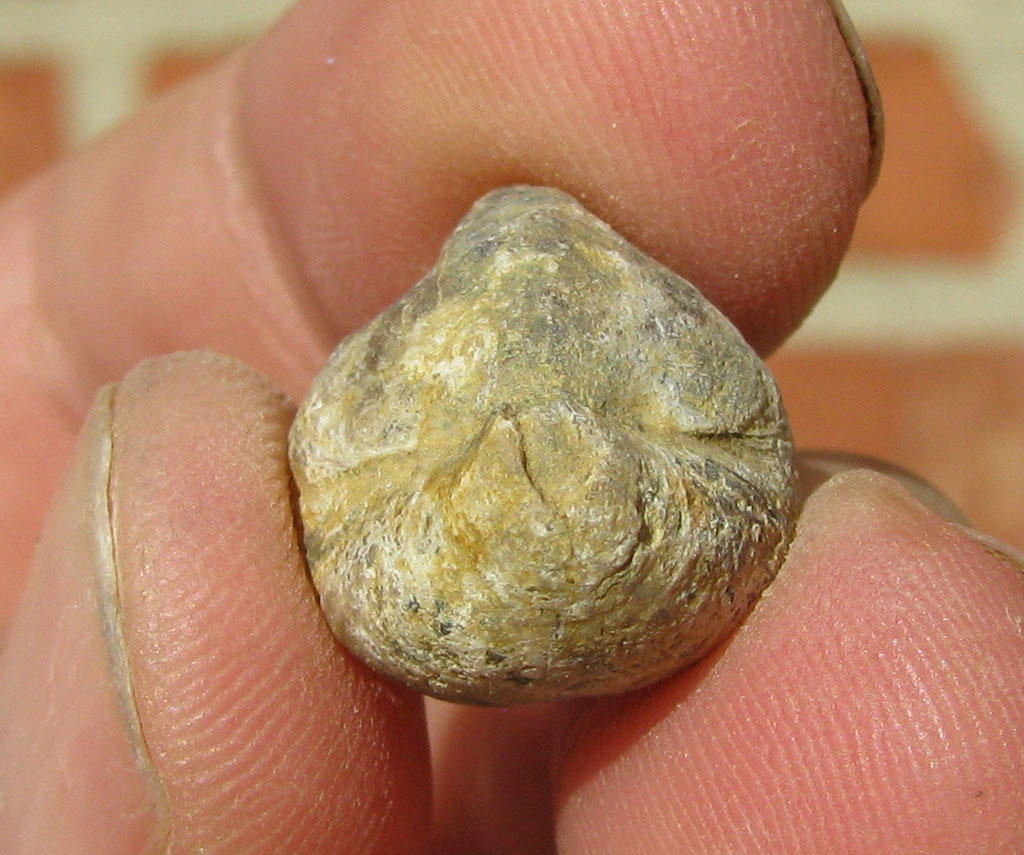
Here is another mystery brachiopod from the Chainman formation of Utah. It is a triangular shaped shell which is longer than wide. Both valves have coarse folds that extend from the hinge line to the anterior margins with a simple fold and sulcus. The hinge line is flat and runs the length of the anterior margin. A small triangular shaped delthyrium is present on the anterior of the pedicle valve but it is only 1/2 the length of the hinge line. My initial speculation as to the identity of this shell was that it is a Punctospirifer sp. But while reading through some publications concerning Mississippian faunas in Western US formations, I came across a similar looking shell called Spiriferellina sp. I want to lean towards the latter name because it would be more appropriate for the region I found it in.  Still, without a complete shell or multiple examples I probably can not truly identify this specimen.

Brachial valve
Anterior
Pedicle valve
Posterior
Profile

This specimen came from the Chainman formation at Conger Springs (west of Delta), Utah and is Carboniferous (Mississippian epoch, Visean stage of the ICS or Mississippian period, Chesterian stage in the US) in age.

Sunday, January 31, 2016

Reticulariina sp. ? brachiopod from the Chainman formation of Utah

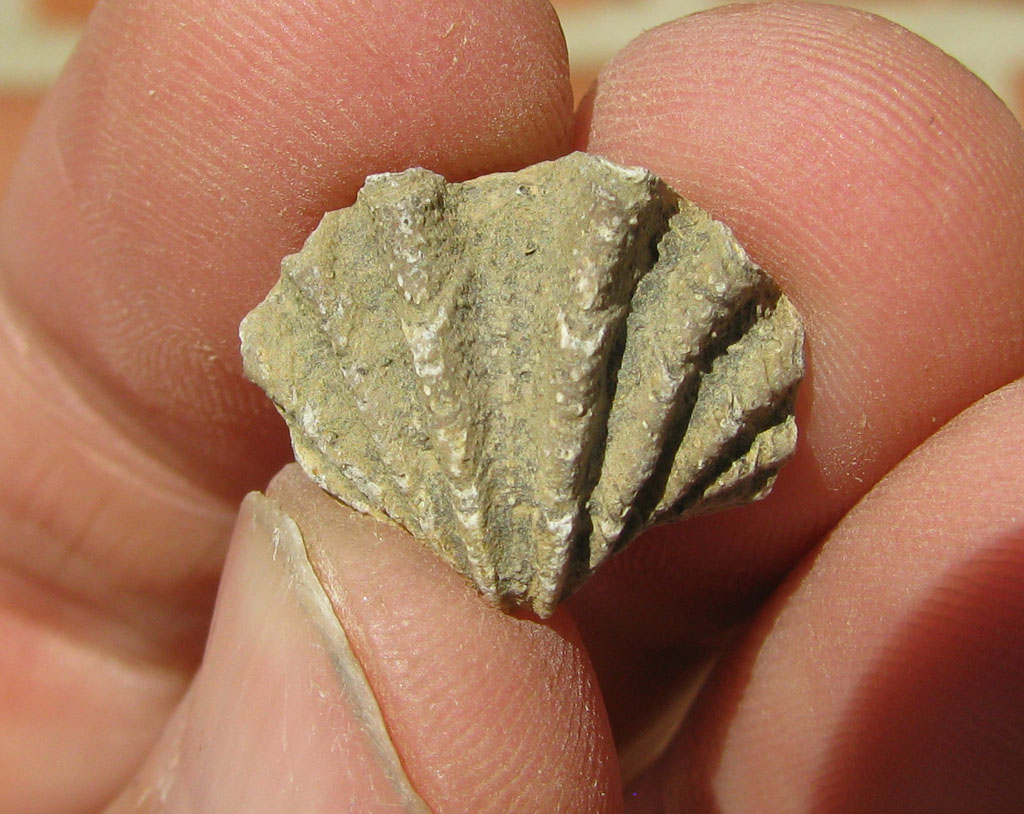
I believe this next fossil is a Reticulariina sp. brachiopod but am not sure of the species. It comes from the Chainman formation of Utah which is lower Carboniferous in age (Mississippian epoch, Visean stage of the ICS or Mississippian period, Chesterian stage in the US). The shell is small, with a very convex pedicle valve and a flat to slightly convex brachial valve. It sort of resembles a Cyrtia sp. type brachiopod that occurred in the Devonian. Each valve has very coarse plications with 2-3 on each side of the median. There is a sulcus and fold structure present on the valves but it is only noticeable at the anterior margins. It is hard to see but it appears there are some sort of concentric growth lines decorating the shell surface as well. The posterior of the pedicle valve has a large triangular interarea under a beak that recurves back.

Brachial valve
Anterior
Pedicle valve
Posterior
Profile


This specimen came from the Chainman formation at Conger Springs (west of Delta), Utah and is Carboniferous (Mississippian epoch, Visean stage of the ICS or Mississippian period, Chesterian stage in the US) in age.

Thursday, January 28, 2016

Anthracospirifer sp. brachiopod from the Chainman formation of Utah

I believe this next brachiopod fossil is Anthracospirifer sp.. It comes from the Chainman formation at Conger Springs in Utah. The shell is missing part of a "wing" but enough is left to help identify it. The pedicle and brachial valves are equally convex, rectangular shaped and have coarse plications. A sulcus on the pedicle valve corresponds with a single fold on the brachial valve. The pedicle valve has a wide interarea with a recurved beak.

Brachial valve
Anterior
Pedicle valve
Posterior
Profile


There are a number of known species of Anthracospirifer but little literature on what specific forms occur in the Chainman formation. One resource, "Mississippian Stratigraphy of the Diamond Peak Area, Eureka County, Nevada", Brew, David, 1971, Indicates that A. occiduus, A. pellaensis, A. increbescens and A. bifurcatus are found in equivalent strata in Nevada but I can find no clear illustrations of those species or those I find do not match what I have here..

The reference "Brachiopoda of the Amsden Formation (Mississippian and Pennsylvanian) of Wyoming.", MacKenzie Gordon, Jr., 1975 lists multiple species of Anthracospirifer, including A. occiduus but none seem to match my specimen.

This specimen came from the Chainman formation at Conger Springs (west of Delta), Utah and is Carboniferous (Mississippian epoch, Visean stage of the ICS or Mississippian period, Chesterian stage in the US) in age.
Monday, January 25, 2016

Cleiothyridina hirsuta brachiopod from the Chainman formation of Utah

Looking very much like an Athyris sp. brachiopod, this fossil is Cleiothyridina hirsuta.  It is a rounded to subovate shell with both the pedicle and brachial valve equally convex. The surface of each valve has concentric growth lines but no obvious costae or sulcus.

Brachial valve
Anterior
Pecidle valve
Posterior
Profile

I used the reference "Brachiopoda of the Amsden Formation (Mississippian and Pennsylvanian) of Wyoming.", MacKenzie Gordon, Jr., 1975 pg. 56, plate 7, fig 31, 38-40, 42-45, 58, 59 to identify this brachiopod. This specimen came from the Chainman formation at Conger Springs (west of Delta), Utah and is Carboniferous (Mississippian epoch, Visean stage of the ICS or Mississippian period, Chesterian stage in the US) in age.

Friday, January 22, 2016

Inflatia sp. brachiopod from the Chainman formation of Utah

I found this specimen of a spiny productid brachiopod at Conger Springs, Utah. I believe it is an example of the genus Inflatia. I am unsure as to the species because the preservation is not the best. It was a spiny brachiopod but not as spiny as a similar genus, Juresania.  The pedicle valve is very convex while the brachial valve is flat to slightly convex and the margins of both meet at a 90 degree angle to the brachial valve.  Both valves are decorated with linear costae but only the pedicle valve has spines. The spines appear somewhat randomly placed although there could be a pattern that I don't recognize.

Pedicle valve
Anterior
Brachial valve
Posterior
Profile

I used the reference "Brachiopoda of the Amsden Formation (Mississippian and Pennsylvanian) of Wyoming.", MacKenzie Gordon, Jr., 1975 pg. 36, plate 3, fig 1-9 to identify this brachiopod.
This specimen came from the Chainman formation at Conger Springs (west of Delta), Utah and is Carboniferous (Mississippian epoch, Visean stage of the ICS or Mississippian period, Chesterian stage in the US) in age.

Tuesday, January 19, 2016

Crurithyris sp.? brachiopod from the Chainman formation of Utah

This next brachiopod looks very similar to a genera called Crurithyris that is present in the Pennsylvanian. I can't locate any literature or examples from the Chainman formation at Conger Springs, Utah that indicate this could be any other genera. So I am tentatively labeling this as Crurithyris sp. The shell is small, wider than long with a very convex pedicle valve and a slightly convex brachial valve. The valves are smooth with no obvious ornamentation. The pedicle valve recurves back over the interarea and the margins of the valves are flat with no evidence of a fold or sulcus.

Brachial valve
Anterior
Pedicle valve
Posterior
Profile

This specimen came from the Chainman formation at Conger Springs (west of Delta), Utah and is Carboniferous (Mississippian epoch, Visean stage of the ICS or Mississippian period, Chesterian stage in the US) in age.

Saturday, January 16, 2016

Eumetria costata brachiopod from the Chainman formation of Utah

While search for fossils at Conger Springs, Utah I found lots of examples of these little brachiopods called Eumetria costata. They are small shells that are longer than wide with the widest point about midway between the umbo and the anterior margins. Each valve is roughly equally convex and has around 20 radiating costae on the surface. The umbo extends beyond the brachial valve and curves slightly to the point where the circular formen opening is located.

Specimen #1 - Brachial valve
Anterior
Pedicle valve
Posterior
Profile

Specimen #2 -Brachial valve
 Anterior
 Pedicle valve
 Posterior
 Profile


I used the reference "Geology of Millard County, Utah", Lehi F. Hintze & Fitzhugh D. Davis, 2003 pg. 106, fig.142 to identify these brachiopods. These specimens came from the Chainman formation at Conger Springs (west of Delta), Utah and are Carboniferous (Mississippian epoch, Visean stage of the ICS or Mississippian period, Chesterian stage in the US) in age.

Wednesday, January 13, 2016

Composita elongata brachiopod from the Chainman formation of Utah

Another Composita species that I found in the Chainman formation of Utah is Composita elongata. This species is narrower than some but this particular specimen has a very strong fold and sulcus that is well developed. According to MacKenzie (see below for reference), C. elongata may intergrade with C. subtilita (see previous post). This means that the two species sometimes share the same form but remain distinct.

I used the reference "Brachiopoda of the Amsden Formation (Mississippian and Pennsylvanian) of Wyoming.", MacKenzie Gordon, Jr., 1975 pg. 64, plate 10, fig 16-25 to identify this brachiopod.This specimen came from Conger Springs west of Delta, Utah and is Carboniferous (Mississippian epoch, Visean stage of the ICS or Mississippian period, Chesterian stage in the US) in age.

Pedicle valve
Anterior
Brachial valve
Posterior
Profile (with pedicle valve on top)
Profile (with brachial valve on top)

I used the reference "Brachiopoda of the Amsden Formation (Mississippian and Pennsylvanian) of Wyoming.", MacKenzie Gordon, Jr., 1975 pg. 64, plate 10, fig 16-25 to identify this brachiopod.

Sunday, January 10, 2016

Composita subtilita brachiopod from the Chainman formation of Utah

Today I have a specimen of what I believe is Composita subtilita from the Carboniferous (Mississippian epoch, Visean stage of the ICS or Mississippian period, Chesterian stage in the US) rocks of Utah. It was found near Conger Springs which is about 63 miles (as the crow flies) west of the town of Delta in Millard County. The rocks exposed at Conger springs are the Chainman formation and are the youngest Mississippian layers before changing to the Pennsylvanian. The shell of Composita subtilita is round to ovate with a fold in the pedicle valve that corresponds to a sulcus in the brachial valve. The fold is shallow at the beak and gets gradually wider and deeper as it progresses to the anterior margins. Both valves are equally convex and are widest about mid way between the anterior and posterior.

Brachial valve
Anterior
Pedicle valve
Posterior
Profile


I used the reference "Brachiopoda of the Amsden Formation (Mississippian and Pennsylvanian) of Wyoming.", MacKenzie Gordon, Jr., 1975 pg. 64, plate 10, fig 33-37 to identify this brachiopod.