Monday, February 10, 2020

Triarthrus eatoni Trilobite from the Whitby formation

Certain layers within the Collingswood member of the Whitby formation are rife with the shed exuviae of the Trilobite Triarthrus eatoni. Like the similar (but older) rocks of the Utica shale in New York, most of the fossils are either partially or completely disarticulated. Most commonly found are articulated portions of the thorax/pygidium and disarticulated pieces of the cephalon.

Specimen #1 - A large slab with multiple examples


Note the disarticulated glabella from a Pseudogygites sp. Trilobite and Lingula cobourensis brachiopods.


Specimen #2 - Partial cephalon which is mostly just the glabella.
Specimen #3
Specimen #4


The Whitby formation is Ordovician in age (late Ordovician, Katian/Mohawkian stage).
These fossils were collected from the St. Mary's Limestone Quarry in Bowmanville, Ontario. I used William Hessin's book "South Central Ontario Fossils", 2009, Self Published, pg. 205 to help identify these fossils.

Saturday, February 8, 2020

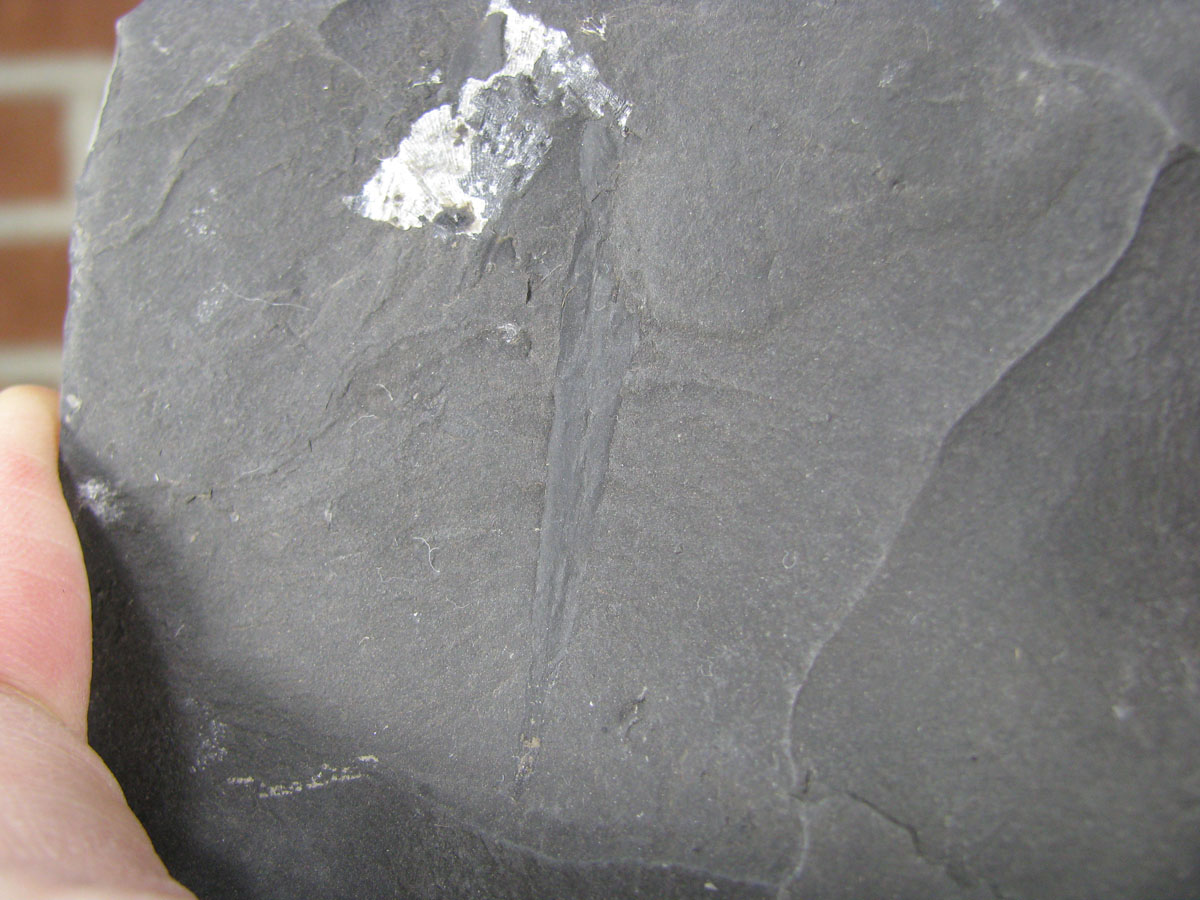
Geisonoceras tenuistriatum cephalopod from the Whitby formation

I've found a couple of examples of small Cephalopods in the Collingswood member of the Whitby formation. They are hard to photograph as they do not contrast much with the black shale but I can see they are conical in shape and taper to a point. Some examples have fine ribbing or striations parallel to the shell growth. According to William Hessin these are likely Geisonoceras tenuistriatum which is restricted to the Whitby formation.

Specimen #1


Specimen #2


The Whitby formation is Ordovician in age (late Ordovician, Katian/Mohawkian stage).
These fossils were collected from the St. Mary's Limestone Quarry in Bowmanville, Ontario. I used William Hessin's book "South Central Ontario Fossils", 2009, Self Published, pg. 155 to help identify these fossils.

Thursday, February 6, 2020

Ecculiomphalus sp. gastropod and Ctenodonta sp. Pelecypod from the Whitby formation

Splitting the black shale of the Collingswood member of the Whitby formation I've found a few examples of what is likely a gastropod. The slab below shows what may be an example of  Ecculiomphalus sp. or possibly Liospira sp.  Both of those species are low conispiraled gastropods although Ecculiomphalus sp. should have some fine ornamentation on the shell. I don't see that on this specimen but William Hessin states that it is only found in the lower part of the Whitby formation (Craigleith member which is equivalent to the Collingswood member).


There is also a cast of a Pelecypod present on this slab that I believe is a species of Ctenodonta

The Whitby formation is Ordovician in age (late Ordovician, Katian/Mohawkian stage).
These fossils were collected from the St. Mary's Limestone Quarry in Bowmanville, Ontario. I used William Hessin's book "South Central Ontario Fossils", 2009, Self Published, pg. 137-138, 144 to help identify these fossils.

Tuesday, February 4, 2020

Lingula corbourgensis brachiopod from the Whitby formation

The most common Brachiopod to be found in the Collingswood member of the Whitby formation is Lingula corbourgensis. It is an inarticulate Brachiopod with a phosphatic shell and can get relatively large. Below are several examples that occur on slabs that I've split.

Specimen #1

Specimen #2

Specimen #3


The Whitby formation is Ordovician in age (late Ordovician, Katian/Mohawkian stage).
These fossils were collected from the St. Mary's Limestone Quarry in Bowmanville, Ontario. I used William Hessin's book "South Central Ontario Fossils", 2009, Self Published, pg. 117 to help identify these fossils.

Sunday, February 2, 2020

Primitiella ulrichi ostracod from the Whitby formation

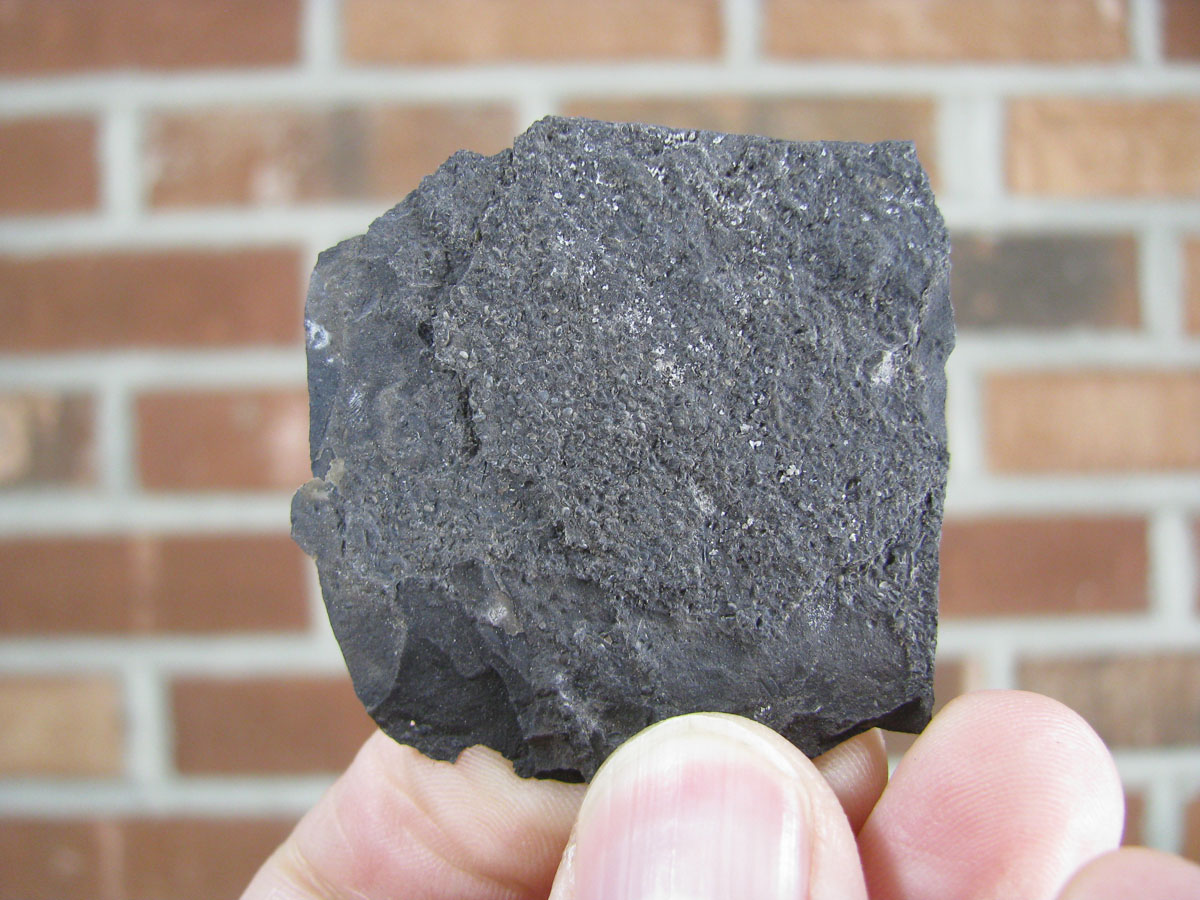
In the black oil shales of the Collingswood member of the Whitby formation there are often found great shoals of Ostracod fossils.William Hessin states in his book that the only known species of Ostracod found in these shales is Primitiella ulrichi.  The fossils are plain and oval shaped, kinda boring really and easily overlooked except for their numbers.

Here are two pieces of shale that shows how one typically notices them.


Under the microscope is where you can see them up close. Rarely are the shells still present as they often flake off when the shale splits. All of the pictures below were taken with my camera through a microscope.


The Whitby formation is Ordovician in age (late Ordovician, Katian/Mohawkian stage).
These fossils were collected from the St. Mary's Limestone Quarry in Bowmanville, Ontario. I used William Hessin's book "South Central Ontario Fossils", 2009, Self Published, pg. 211 to help identify these fossils.